Feb 9, 2006
Did you tell Mr. Hagin in that phone call that New Orleans was flooding?
The Public Record
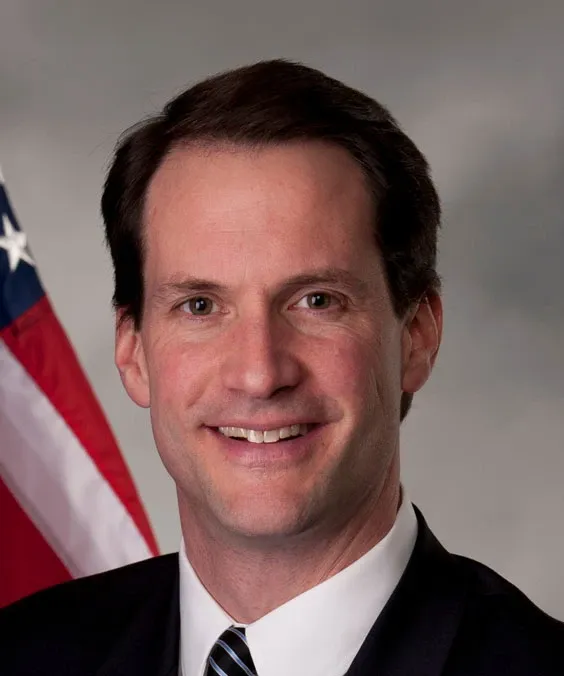
Joseph Lieberman is an American politician and attorney who served as a United States Senator from Connecticut from 1989 to 2013. Initially a member of the Democratic Party, he gained national prominence as the party's nominee for Vice President in the 2000 election alongside Al Gore. After losing the election, Lieberman continued to serve in the Senate, where he became known for his centrist views and willingness to cross party lines, particularly on issues such as national security and energy policy.
Did you tell Mr. Hagin in that phone call that New Orleans was flooding?
Republican Susan Collins, chair of that committee, and Joseph Lieberman, its ranking Democrat wrote to the White House weeks ago to complain that most of the documents the panel requested had not been provided.
I think we were both stunned by the continuing devastation that exists.
I think both sides have similar types, or had similar types of projects in the past. They don't have a place here in Washington.
At least one of the bills, Senator Reid's bill, makes an attempt to make it illegal for a member to take or withhold action in an attempt to influence a private employer's hiring decisions for partisan reasons.
I got a kick out of the very accurate point that Mr. Miller made that the Abramoff scandal was broken in the first instance not by any enforcement mechanism, but by other lobbyists who felt that Abramoff was taking their clients away.
There is no intention in any of these bills to limit the capacity of organizations like yours or others to get their members to lobby Congress.
The intentions in the bill that Senator McCain and I have put in would be to force the light of disclosure on all forms of grassroots lobbying.
By doing so, our Committee, under your leadership, sends a strong and clear signal that Congress will come together across party lines this year to reform our lobbying laws and remove the cloud of suspicion that currently hangs over this…
The behavior of Mr. Abramoff and his associates undercuts that trust and sends the message that in Washington, results go to the highest bidder, not to the greatest public good.
Trust between the people and their elected leaders is essential to our democracy.
The Department of Homeland Security has engaged in a strategy of slow-walking our investigation, in the hope that we would run out of time.
Among the offices receiving that memo was the White House Situation Room, which received it at 1:47 a.m. on Monday, August 29, several hours before Katrina made landfall. What happened to that report?
It's time for Democrats who distrust President Bush to acknowledge that he will be a commander in chief for three more critical years, and that, in matters of war, we undermine presidential credibility at our nation's peril.
It is time to sort of appoint an informal war cabinet made up of Democratic and Republican congressional leaders to sit down with the president.
The Iraqis are beginning to show much more self-sufficiency. They're a long way from being able to take it on their own.
If this issue is resolved it will be because all sides are comfortable with the science and epidemiology of thimerosal and autism. The science and epidemiology of thimerosal and autism is not clear up to this point. Can I have assurance…
I believe that we must at least consider an association between thimerosal exposure and autism. I understand the rate of autism has risen perhaps 800 percent since 1990 and although there could be a number of reasons including better…
We're asking the same question that everybody asked after 9/11: How could this have happened in America? And what must we do urgently to make sure nothing like this ever happens again?
I would like to yield the hour allotted to me to the floor manager, the Senator from Rhode Island.
Politicians like Joe Lieberman