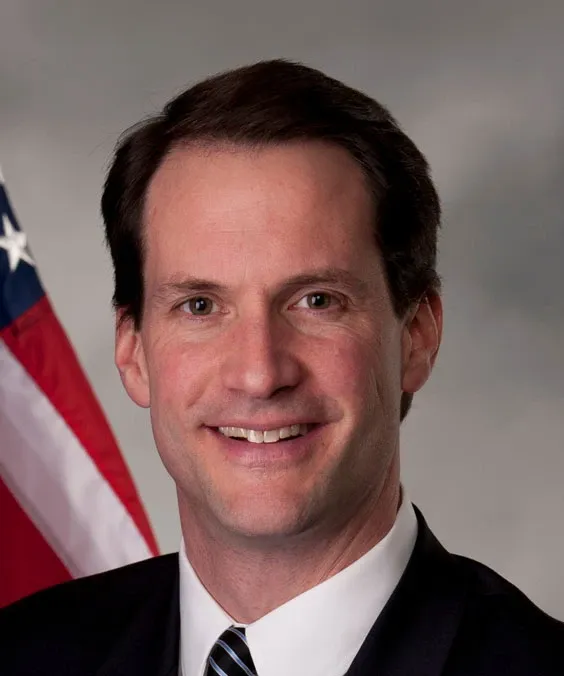
Joe Lieberman
The Public Record
Joseph Lieberman is an American politician and attorney who served as a United States Senator from Connecticut from 1989 to 2013. Initially a member of the Democratic Party, he gained national prominence as the party's nominee for Vice President in the 2000 election alongside Al Gore. After losing the election, Lieberman continued to serve in the Senate, where he became known for his centrist views and willingness to cross party lines, particularly on issues such as national security and energy policy.
Jan 14, 2009
It's an important national debate that has to happen here in Congress and hopefully throughout the country.
Jan 14, 2009
Afghanistan was the central front of the war on terrorism, a war of necessity we could not muddle through.
Jan 14, 2009
Sending more trainers and more combat troops gives us a much higher probability of regaining the initiative in this critical battle.
Jan 14, 2009
If we just send trainers and don't send more combat troops... then I believe the Afghan people... are going to decide we're essentially on our way out.
Jan 14, 2009
To now-President Obama's credit as far as I'm concerned, he's followed through on those statements.
Jan 14, 2009
Isn't it true that any effort to break away local Taliban... requires us similarly to convince those local Taliban that we're committed to this fight?
Jan 14, 2009
I will enthusiastically support the President's renomination of you for a second term.
Jan 14, 2009
I wish this committee the best on that particular provision in the conference committee with my House colleagues.
Jan 14, 2009
I support the President's budget. I believe that those helicopters are, in fact, critical.
Jan 14, 2009
We are concerned that the growing strength of Iran's Islamic Revolutionary Guard Corps (IRGC) over Iranian politics will result in the militarization of Iranian foreign policy.
Jan 14, 2009
When confronted with internal unrest, a tactic is to look external to a common foe that can be portrayed.
Jan 14, 2009
I really appreciate that answer, and I am sure that everybody in the Army and their families particularly will appreciate it.
Jan 14, 2009
I have been contemplating introducing an amendment on the floor when our bill comes up next week to include 2010 as a year in which that increase of 30,000 from 547,000 to 577,000 can begin.
Jan 14, 2009
I understand that the Afghan police target has now been raised, but that the level--I particularly focus on the army--remains inadequate in terms of what I think most people believe the needs are going to be in Afghanistan for Afghan…
Jan 14, 2009
I would see that as a significantly difficult issue for the region. It would create instability within the region.
Jan 14, 2009
Thanks to both of you. You are really extraordinarily well-qualified for the positions that the President has nominated you for.
Jan 14, 2009
We need multi-layered missile defense capabilities stationed and operational in the region before a threat fully emerges to ensure our common European allies' and partners' security.
Jan 14, 2009
The deployment of ballistic missile defense assets in Europe would make a significant contribution to the protection of the United States and Europe from a Middle-Eastern ballistic missile threat.
Jan 14, 2009
It's your statement, here, that you intend to work with Ambassador Eikenberry on a joint civil-military plan for Afghanistan.
Jan 14, 2009
I think both of those points--very important to hear from you--that is, for Members of Congress and the American people to understand, that it's winnable, but it's not going to be easy; it's probably going to get worse before it gets…
Jan 14, 2009
I think our credibility in the world--we have the ability to support the people of Afghanistan and to move in to shape a better future that they want, and I think that that will make a difference in how we are viewed, worldwide.
Jan 14, 2009
I want to focus in on Afghanistan, for most of my questions, and say that, in nominating Admiral Stavridis and General McChrystal to the positions you're going to, it seems to me that the President has put in place here what I would call…
Jan 14, 2009
The United States has not yet brought to bear all the elements of statecraft to deal effectively with this issue.
Politicians like Joe Lieberman