Nov 12, 2013
Frankly, we, in my opinion, can't just sort of accept the status quo in this area.
The Public Record
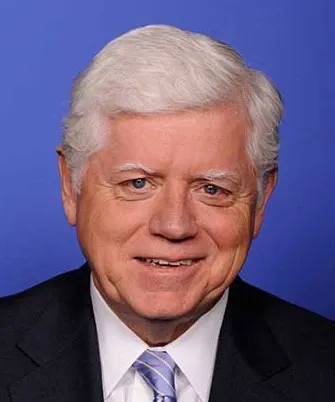
Joe David Courtney is a U.S. Representative for Connecticut's 2nd congressional district, serving since January 4, 2007. A member of the Democratic Party, he has focused on issues such as education, healthcare, and veterans' affairs during his tenure. Courtney has been an advocate for policies that support working families and has worked on initiatives to improve infrastructure in his district. He has also played a role in discussions surrounding military and defense matters, given the presence of military installations in Connecticut.
Frankly, we, in my opinion, can't just sort of accept the status quo in this area.
I think it is important to understand the kind of professions I am talking about are not public sector jobs.
I am not arguing for preserving the status quo... we have got a problem in terms of one discrete part of the workforce.
I am concerned that lowest price technically acceptable contracting has become an over-utilized practice in the acquisition community.
Again, I think Mr. Forbes' basic point is correct, which is that we are sort of paying for the sins of the past here.
Ron, your report mentioned the possible benefit of having cross-class block contracts as a way of trying to generate more savings.
I completely agree with and the need to look at whether we shift DOD's overall pie in terms of orienting it more to shipbuilding, I completely agree with it.
Right. Well, there is clearly going to be overlap between the Virginia and the Ohio replacement.
We need a comprehensive bill that funds the entire government so that we are not again just sort of constantly seeing something else pop up that is not provided for.
So again, if we are talking about adversaries that are not as limited as Libya was, I mean obviously losing payload is really actually going to handicap us more in terms of overcoming those.
I was just sort of wondering if you could talk a little bit about, you know, what will happen when those SSGNs go off line if we don't replace that payload capacity.
Which is that, you know, you can have all the platitudes in the world about people's right to equality and votes and collective bargaining. But if you don't have a remedy, it really doesn't exist.
You are really taking an oath to a system that is about protecting people's dignity and rights as American citizens.
Thank you for your amazing service, for you belief in our system. Not just as a soldier, but also a citizen and as a worker.
It has been 9 months since Sandy Hook. There are too many mentally ill people getting too easy access to weapons, and it is time for this Congress to pass a background check bill, which would help, frankly, all installations in terms of…
Again, when we talk about the submarine gap, which you have done an outstanding job, I think it is important really also for the record to remember that it was this subcommittee that in the spring of 2007, actually led the way in terms of…
And hopefully the bipartisan budget negotiations that are going to start today are going to get us to a point where we can, again, avoid all the negative consequences that you have described here today.
Again, I think a U.N.-sponsored mechanism is something that is going to raise people's comfort level infinitely compared to use of military force.
This being a self-inflicted wound to our military readiness, it is also completely unnecessary.
This is just another powerful argument for why we need to turn off sequester.
Today the subcommittee meets in open session to hear testimony on the acquisition and development challenges associated with the Littoral Combat Ship.
Politicians like Joe Courtney