Joe Courtney
The Public Record
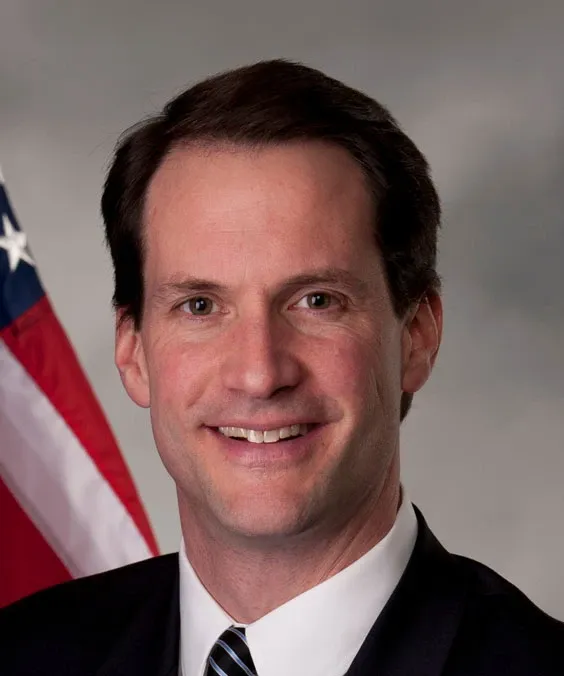
Joe David Courtney is a U.S. Representative for Connecticut's 2nd congressional district, serving since January 4, 2007. A member of the Democratic Party, he has focused on issues such as education, healthcare, and veterans' affairs during his tenure. Courtney has been an advocate for policies that support working families and has worked on initiatives to improve infrastructure in his district. He has also played a role in discussions surrounding military and defense matters, given the presence of military installations in Connecticut.
Jun 21, 2017
I have been a very staunch supporter of the Job Corps since I've been in the Congress the 8-1/2 years I've been here.
Jun 14, 2017
I'm hopeful that Congress will reject the President's proposed cuts to job training programs and make the right investments in our nation's workforce development system.
Jun 14, 2017
Together, we must ensure that WIOA fulfills its goals of improving the quality of job training programs and aligning training to real-world labor market needs.
Jun 14, 2017
It is unthinkable to consider cutting critical programs without giving them a chance to become established and successful in our communities.
Jun 13, 2017
If you're a worker trying to get a union, these bills make you wait. If you're an employer trying to destroy a union, these bills give you the fast track.
Jun 13, 2017
These bills work hard to delay union certification elections, to give employers more time to campaign while creating a new decertification process that can be triggered by the employer.
Jun 13, 2017
I worked on the Hill for 11 years, and all that time, I never saw a bill as extreme and provocative and anti-union, anti-worker as the Employee Rights Act.
May 24, 2017
The tankers, bombers, and airlift programs that fall under the projection forces side of our panel's oversight serve as the backbone of our Nation's ability to bring and sustain the power that preserves our Nation's interests around the…
May 23, 2017
In summary, we have heard again a very broad-based bipartisan chorus of voices in support of this legislation. Again, like in committee, hopefully, all of us will stand together to support this really important update to making sure that…
May 23, 2017
Just one quick question, which is kind of a nagging one that my office certainly hears a lot about, from Groton, which is the issue of security clearances.
May 23, 2017
The President actually was in my district just last week at the Coast Guard Academy and threw his support behind the recapitalization of the icebreaker fleet.
May 23, 2017
Thank you, Mr. Chairman. Ms. Stiller, thank you for noting in your testimony that the budget calls for sort of filling in that 2021 dip in the Virginia-class production.
May 23, 2017
Thank you, Mr. Chairman. And again, I want to thank the three distinguished witnesses that are here today to discuss the fiscal year 2018 budget request for the Department of the Navy and the Marine Corps.
May 23, 2017
So I think we are going after that problem, because the number of ships we have is limited.
May 23, 2017
Well, again, I think for all the reasons that you stated, the Transparency Act and Know Before You Go, I mean, it is time for us to do this and move forward and, again, hopefully defer any kind of drastic budget decisions like the ones…
May 23, 2017
I would like to, again, just sort of make a comment that a lot of the testimony has been framed in terms of the benefit to the students and to the families, but I do think Mr. Delisle made an important point that the data gaps is creating…
May 17, 2017
We cannot afford to rest on our laurels. Rather, we must continue to adapt and advance new technologies, tactics, and operational concepts.
May 17, 2017
The U.S. Navy and Marine Corps team must be prepared to meet new challenges as our potential adversaries rapidly improve their tactics and technologies.
May 17, 2017
Thank you, Mr. Chairman, for holding this hearing on the future of amphibious warfare in a contested environment.
May 16, 2017
I represent southeastern Connecticut, which a few years ago we celebrated the 60th anniversary of the launch of the Nautilus.
May 2, 2017
If the follow-on frigate can expand on the lethality and survivability further, I believe it will be exactly in line with the distributed fleet concept that our Navy leaders continue to say that we need.
May 2, 2017
We cannot afford nor does it make sense to simply build highly advanced yet very expensive destroyers.
Politicians like Joe Courtney