Jan 26, 2011
Look, if we don't save the money that we are committed to save, that we have said we would save, that we will look at it again as a Congress and make sure we have those savings.
The Public Record
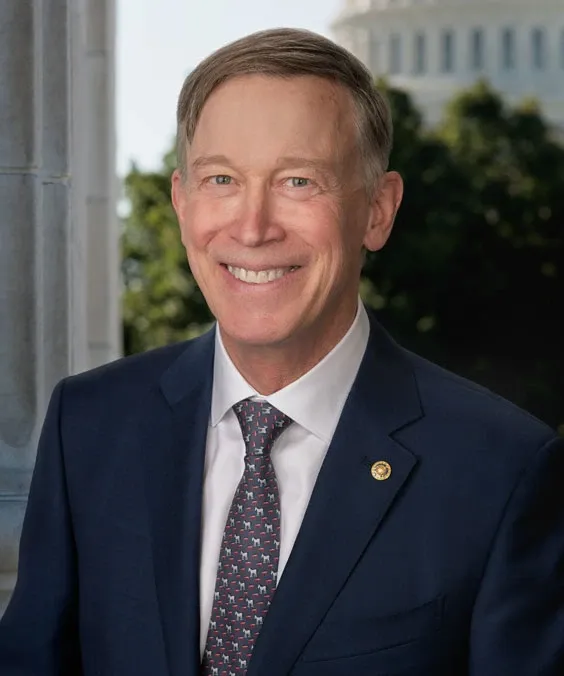
Michael Farrand Bennet is a United States Senator from Colorado, serving since January 21, 2009. A member of the Democratic Party, Bennet has focused on a range of issues including education, healthcare, and economic policy throughout his tenure. He has been an advocate for improving access to quality education and has worked on initiatives to reform the healthcare system to make it more affordable for Americans.
Look, if we don't save the money that we are committed to save, that we have said we would save, that we will look at it again as a Congress and make sure we have those savings.
One of the things I learned during the health care debate was that, because of the way the incentive structure worked, one out of every five Medicare beneficiaries that went to the hospital were re-admitted within a month for conditions…
At the heart of this reform, in many ways, is an attempt, a rare attempt to actually change the incentive structures so that we can deliver higher quality at a lower cost.
If I had to sum up the last 2 years of my town hall meetings in Colorado on this issue, what I would say is that people are saying: We hated the system as it existed, the health insurance system, and we also believe deeply in your…
Medicare, as a result was spending $17 billion a year on these hospital re-admissions that could have been prevented.
I believe the Senate will as well. President Reagan began negotiating the first START treaty with the Soviet Union in 1982--right in the middle of the Cold War. Even today, all these years later, we remember Reagan's brilliant phrase…
If we don't deal with the deficit and the debt problem the capital markets are going to decide that question for us, and all of these programs are going to go away.
One of the saddest moments of my Senate career was learning that the observation that you're entitled to your own facts but not your own opinion, was not original with me.
We are in a deep, deep hole working in a town where the political debate, in my view, is almost utterly unmoored from the facts.
Part of our job was to make sure we're creating more opportunity, not less, for our kids and our grandkids.
This entire conversation has been like watching a slow-moving train wreck for 22 months.
Thank you for holding this hearing, although I have to say it is so depressing how little we have moved in the last 3 years on these questions.
That loan be modified and that that person remain in their house, because if they do not, the value of their house is just going to go down.
But it seems it is clearly in the interest of people that can pay on their loans at a reduced value and who want to stay in their home, it is clearly in their interest to do that, right?
The value of the modified mortgage is worth more than the proceeds from a foreclosure sale would be, it would seem to me, and I could be wrong.
And it is a boondoggle of a mess, and I think there is some--and the thing that I cannot understand is where the misalignment of interest is here, because we have millions of people in this country that are underwater in their mortgages.
The entire economic recovery in many respects rests on our being able to get this sorted out.
Politicians like Michael Bennet