Oct 23, 2017
President Trump's proposed wall would be extremely costly and would require the Federal Government to confiscate private lands.
The Public Record
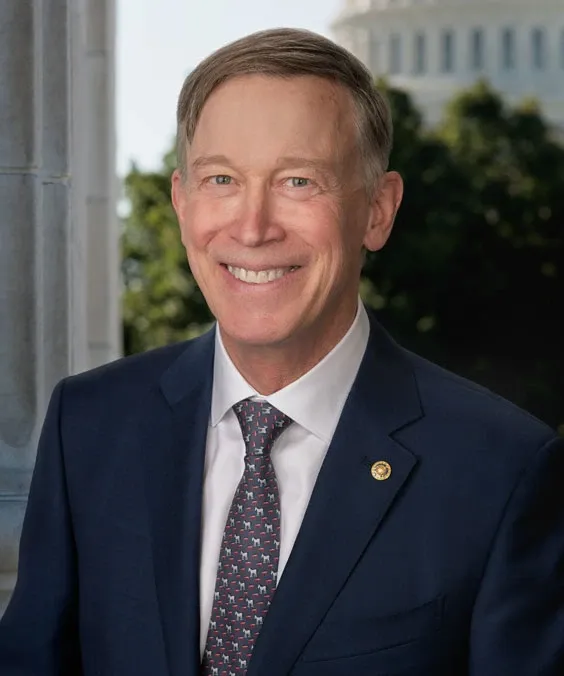
Michael Farrand Bennet is a United States Senator from Colorado, serving since January 21, 2009. A member of the Democratic Party, Bennet has focused on a range of issues including education, healthcare, and economic policy throughout his tenure. He has been an advocate for improving access to quality education and has worked on initiatives to reform the healthcare system to make it more affordable for Americans.
President Trump's proposed wall would be extremely costly and would require the Federal Government to confiscate private lands.
His leaving affirms that working together is not a value for some people and bipartisanship is not a value for some people.
We think this is an enormous opportunity, and Senators Portman and Wyden are working on this.
My hope is that the Senate, and the house, and the President will work together to deal with an issue that confronts us right now with respect to the CSR's.
On behalf of the people of Colorado, who have been waiting forever, it seems, for a bipartisan effort here, I want to express their gratitude to you for the work that you have done.
We encourage the Committee to look at mechanisms and incentives to facilitate pharmacists' ability to access and exchange information through Electronic Health Records (EHRs)--essential to team-based coordinated care.
I recently sent a letter with Senators Cassidy, Warner, and Young to request a GAO study on value-based arrangements.
Is there anybody on this panel who thinks that a jail cell is an appropriate place to do treatment for opioid addiction, or a preferred place to do treatment for opioid addiction?
Do you think it makes any sense, though, for us to be cutting off Medicaid when you have a population in a jail where 100 out of 115 people are addicted to opioids?
We should have a thoughtful move forward, but I do not think we need to... let the perfect get in the way of the good enough.
I think in the 9-page proposal, there are roughly 200 words, I think, devoted to international taxation.
It is mind-boggling that you could think about having a major change with that little consideration.
We also do not want the highly imperfect to be the enemy of the imperfect either.
In my home State of New Hampshire, we have focused a great deal on state flexibility and competency-based assessments and we are proud of that work.
We issued a report on the rural teacher shortage last week, actually, and have a plan moving forward to address it.
I wonder whether you can address, Tim Kaine asked you earlier, about how to attract teachers to high poverty schools.
Thanks, Mr. Chairman. I want to thank you for holding this hearing and for having such an excellent panel.
I think all of us would agree, we have too many states that do not have any data that is of quality before third grade to know whether kids are actually on track or not.
The idea that they would zero out this particular part in the budget is just entirely unacceptable
When we say that one community can have broadband and another community cannot have broadband, it is tantamount to say one group of students can have textbooks this year and another group of students cannot have textbooks this year.
Politicians like Michael Bennet