May 3, 2023
The Better Mental Health Care for Americans Act (S. 923), introduced by Senator Bennet and Chairman Wyden, takes an important step by applying MHPAEA to Medicare Parts C and D.
The Public Record
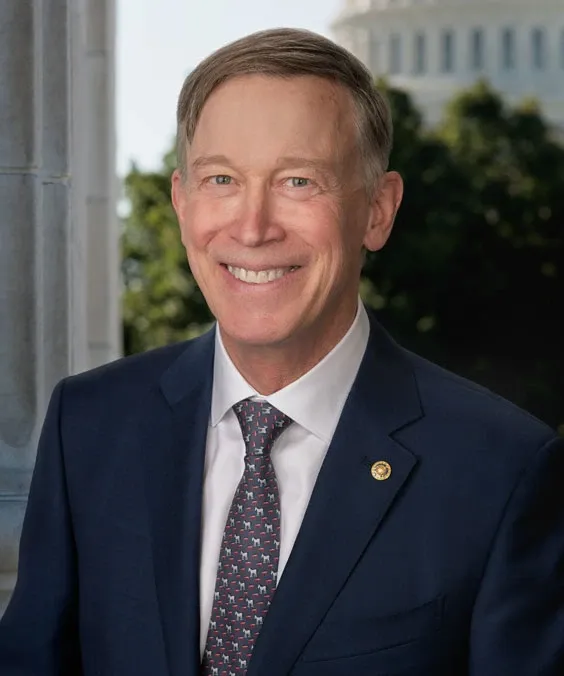
Michael Farrand Bennet is a United States Senator from Colorado, serving since January 21, 2009. A member of the Democratic Party, Bennet has focused on a range of issues including education, healthcare, and economic policy throughout his tenure. He has been an advocate for improving access to quality education and has worked on initiatives to reform the healthcare system to make it more affordable for Americans.
The Better Mental Health Care for Americans Act (S. 923), introduced by Senator Bennet and Chairman Wyden, takes an important step by applying MHPAEA to Medicare Parts C and D.
The Better Mental Health Care for Americans Act (S. 923), introduced this Congress by Senator Bennet and Chairman Wyden, would require Medicare Advantage plans to maintain accurate provider directories.
I introduced the Better Mental Health Care for Americans Act with Chair Wyden this year to address this issue.
There is absolutely no reason why Medicare Advantage plans should treat mental and behavioral health services differently than physical health services.
There is absolutely no reason why Medicare Advantage plans should treat mental and behavioral health services differently than physical health services.
The Better Mental Health Care for Americans Act (S. 923), introduced this Congress by Senator Bennet and Chairman Wyden, would require Medicare Advantage plans to maintain accurate provider directories.
One of the provisions in my mental and behavioral health bill would address the issue of provider directory inaccuracy by strengthening requirements for MA plans.
I would like to see an authentic and deep, committed investment into young, beginning, small, traditional, Indigenous, land-based farmers of color by the USDA.
I agree strongly with the view that other people have expressed today, that one-size-fits-all approaches, when it comes to American agriculture, does not make a lot of sense.
I think answering that question is going to be so vital for the next generation of Americans and the generations coming after that.
It is remarkable, I think, to have the kind of breadth of perspectives that we have had this morning.
I am excited to have somebody on the Agriculture Committee who has got as much firsthand experience as you do.
Today our farmers and ranchers are not dealing with the Dust Bowl, but they are facing, in my part of the country, a 1,200-year drought.
They deserve conservation programs at USDA as imaginative as they are, as ambitious as the problems they seek to solve.
I would like to see an authentic and deep, committed investment into young, beginning, small, traditional, Indigenous, land-based farmers of color by the USDA.
One of the great things about this Committee is that it is not a very partisan Committee.
It is a risky business, capital-intensive business, and if we are not in business then we are not producing food.
I think answering that question is going to be so vital for the next generation of Americans and the generations coming after that.
I agree strongly with the view that other people have expressed today, that one-size-fits-all approaches, when it comes to American agriculture, does not make a lot of sense.
I know you are familiar with the droughts that we are facing in Colorado and Kansas, and as you noted in your testimony the last farm bill had multiple provisions to help producers, and water managers, to cope with water scarcity.
Senator Marshall and I introduced a bill just earlier today--we can do two things at once.
Without Trout Unlimited, without American Rivers acting as conservation partners for our ag work it would not be possible.
Politicians like Michael Bennet