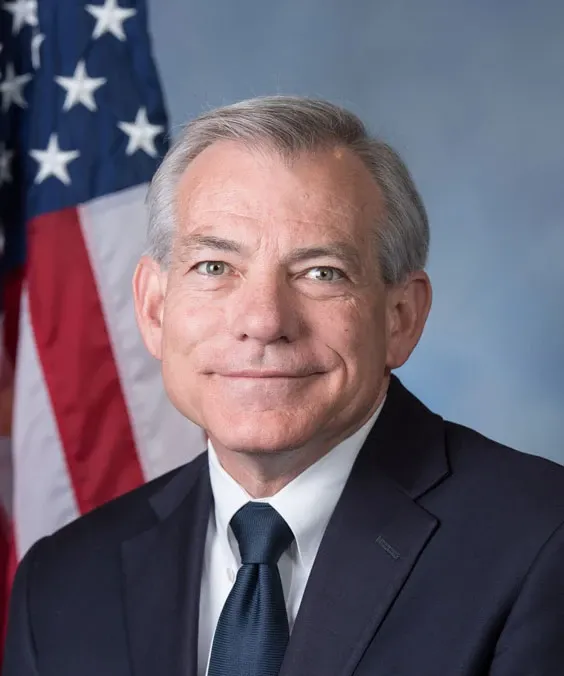
John McCain
The Public Record
John McCain was a prominent American politician and military officer who served as a United States Senator from Arizona from 1987 until his death in 2018. A member of the Republican Party, McCain was known for his bipartisan approach and commitment to national security. He was a veteran of the Vietnam War, where he was a prisoner of war for over five years, an experience that shaped his political career and views on military and foreign policy.
Mar 4, 2013
Does it intrigue you, as it does me, that there doesn't seem to be the concern in Congress that there was back in 1976?
Mar 4, 2013
Arguably, the world is in many ways more dangerous than we have ever seen it.
Mar 4, 2013
Finally, in the event of hostilities on the Korean Peninsula, we all know the North Koreans would lose, they could inflict incredible damage on Seoul because of their capability at the demilitarization zone.
Mar 4, 2013
I don't hear the President of the United States, the Commander in Chief, saying: 'This is destroying our military.'
Mar 4, 2013
I made a comment early in my testimony, that I came into a hollow Army; I don't want to leave a hollow Army when I leave the Army.
Mar 4, 2013
President Obama identified nuclear proliferation as a key danger to the United States and its allies, and it is a danger.
Mar 4, 2013
The disarmament provision and the President's policies are undermined by our inability to keep regimes such as North Korea and Iran from developing nuclear weapons.
Mar 4, 2013
General Dempsey, the Commandant of the Marine Corps says the sequester's impact on marines constitutes excessive risk.
Mar 4, 2013
It is in your interests, in my view, to give us that information as to what would happen if we just simply complied with existing law.
Mar 4, 2013
I am very worried because Congress is not going to raise taxes to eliminate the sequester.
Mar 4, 2013
The defense budget for the 2014 request is $52 billion over the spending cap imposed by the BCA.
Mar 4, 2013
Would you agree with me that the only really restraining force on North Korea would be at this time the Chinese?
Mar 4, 2013
My question is would you recommend that we intercept a missile if it is launched by North Korea, no matter where the intended target is?
Mar 4, 2013
I don't know of a time of greater tension since the end of the Korean War that exists today between North Korea, South Korea, and us.
Mar 4, 2013
I think at the end of the sequestration we'll still have the most powerful military in the world, I expect.
Mar 4, 2013
Do you think they have played a sufficient role of restraint of North Korea yet?
Mar 4, 2013
I see the continued need for a strong, able, and well-resourced force that remains engaged in the Asia-Pacific and beyond.
Mar 4, 2013
Isn't it true that this concern about North Korea is exacerbated by the fact that artillery at the demilitarized zone (DMZ) could strike Seoul and cause horrendous casualties?
Mar 4, 2013
Shortsighted cuts to defense capabilities will result in a weakened U.S. military and would embolden adversaries like North Korea.
Politicians like John McCain