Feb 23, 2016
That, to me, doesn't make any sense at all. And it is penalizing the economy in terms of billions of dollars that could be released back if you release that equity.
The Public Record
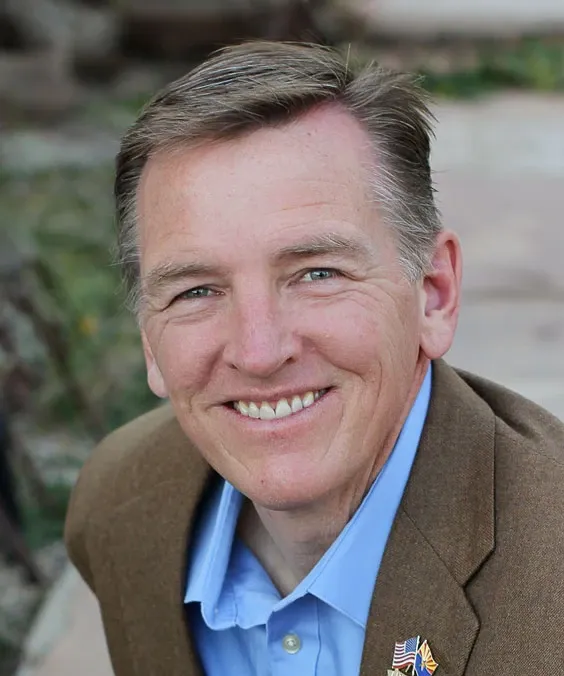
David Schweikert is an American politician serving as the U.S. Representative for Arizona's 1st congressional district since 2011. A member of the Republican Party, he has focused on issues such as fiscal responsibility and economic growth during his tenure in Congress. Schweikert has been involved in various legislative efforts aimed at reducing the national debt and promoting job creation in Arizona. He has also served on several committees, contributing to discussions on budgetary matters and financial services.
That, to me, doesn't make any sense at all. And it is penalizing the economy in terms of billions of dollars that could be released back if you release that equity.
Whether it be in automobile, floor plan, or credit card, you have already transferred the obligation or the risk portion of the paper, and now under Dodd-Frank, we are asking you to retain something that you have already transferred.
You have transferred your risk, you have no contractual obligation to take that risk down, and yet you are still holding capital gains.
If you really want to get geeky, it is getting shorter because they are going shorter on what they call the weighted daily average.
Mr. Mulvaney, would you agree that the cheap money, the artificial liquidity, has kept Congress from doing what it knew it had to do in reforming the entitlement programs?
It has got to enrage us that if you really cared about the country, you would have the two conversations we are demanding: one, your willingness to change the Tax Code and the regulatory code--the things that help grow the economy--and…
So the one thing that was holding us back on discretionary spending is gone, but under the law, it actually comes back in 2018. So that little tiny differential you see on that chart between the red and the green is sequestration.
Basically, let's look at 2016 and 2017. There is no sequestration. We increased our spending. We blew up the sequestration caps this last fall and last year.
We are going to get to that in a second, because you have to understand how much the deficit has gone up this year. We have a slide somewhere here that is going to tell us that. May I ask the Speaker how much time I have remaining? The…
Can you see that date on this particular slide? I know you have eagle eyes from flying those helicopters. Our number is 2030, 2031. Right in there the Social Security trust fund is gone.
Yeah. I am not going there. Sorry to the Speaker. We don't mean to be teasing you. Well, actually, we do. We are just afraid of it. But this is really important. So if there is someone out there, whether you are on the right or the left…
So we are actually paying ourselves a SPIF, and we are still burning through our cash. That is why this board is up, to show you how devastatingly different the number is from just this last August, how fast the numbers have moved. But…
No. No. Technically, we are paying ourselves. So that is part of the revenue into Social Security right now and the Medicare trust fund and all the three big trust funds. We are paying ourselves 3.1 percent, which is actually greater than…
We were talking about earlier that my calculations are that, as of right now today, it is a little under $2.8 trillion of special Treasury notes that have been given from the Treasury to the Social Security trust fund because that cash has…
Actually, General Perry and I were talking about that. You don't mind me calling you that, do you?
No, I haven't. I may let you do that. Let me just pitch what this one means. In 2011, when I first got here and I started this project in our office, we actually set up a little team in our office we call the ideas shop. We actually grind…
And then you try to have the conversation with our friends from the left saying: You don't think the regulatory state affects us? You don't think raising taxes has slowed down the economy? There is some actual great literature--and we are…
In this environment, in the fourth quarter of last year, which is the first quarter of our fiscal year, we were at, what, 0.7?
Oh, no. We are working on those tables because it turns out to be much more complicated. A couple years ago, when we were pretending we would hit 2016 and be at 4\1/2\ percent GDP growth, if you hit that number and could hold it, we were…
Look, the ultimate driver for all of these trust funds, for everything around us, would be incredibly robust economic growth. Math problem.
You will be happy to know that my math is Social Security will have been emptied out 2 years before you retire. I mean, it is 14 years from now. So these are just critical. I yield to the gentleman from South Carolina.
How do you and I and Mr. Perry help the public understand these numbers in the background are driving much of our policy here, much of the fussing here, but yet it is not part of the Presidential campaign, and this is no longer about your…
The gentleman from South Carolina and I have talked about these charts before, and the reality of this should terrify people how fast these numbers are eroding. Where is the conversation? Why isn't it a headline? Why isn't it on business…
It is a combination of economy, growth rate, reaching over and taking $114 billion out to shore up Social Security disability, and our recalculation of what future GDP is. Just for the fun of it, can I talk my friend from South Carolina…
A permanent injury that changes your ability to support yourself. As you know, this last fall, fall of 2015, it was to be out of money right now. We bailed it out, but we bailed it out in a fairly dodgy fashion. Let's be brutally honest…
Politicians like David Schweikert