Mar 25, 2019
Today we are here to examine the President's budget request for the Department of Health and Human Services for fiscal year 2020.
The Public Record
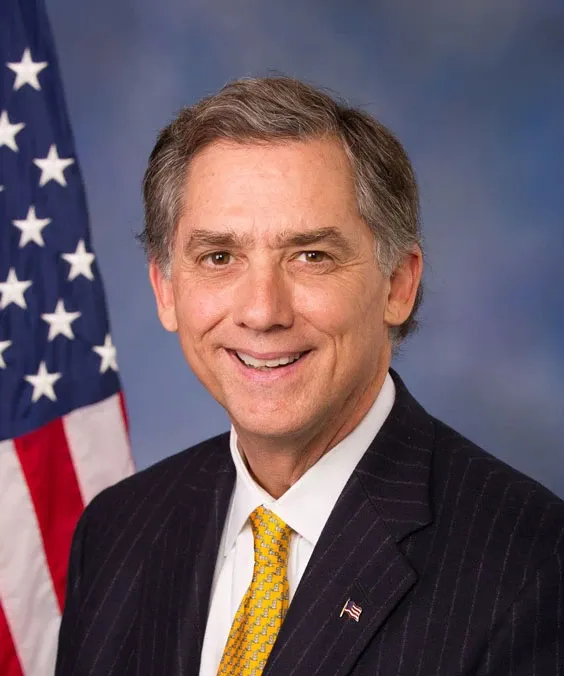
Stephen Allen Womack is an American politician serving as the U.S. Representative for Arkansas's 3rd congressional district since January 5, 2011. He is a member of the Republican Party. Womack has focused on issues such as fiscal responsibility, economic development, and veterans' affairs during his time in office. He has also served on various committees, contributing to legislation that impacts his constituents and the nation.
Today we are here to examine the President's budget request for the Department of Health and Human Services for fiscal year 2020.
Now, provide for the general welfare, I mean, that is kind of a broad subject, and I think we can have a debate that goes a long time about what constitutes general welfare and what does not.
You have got a tough job. I mean, how do you--if you look at the spectrum of the federal government, what we fund, how is it possible to come up with any kind of a plan, any kind of a budget that could satisfy all of the desires, all of…
I hope that the leadership on the other side will find time to present a bill to the floor of the House of Representatives where the entire Congress can vote on a budget.
I appreciate your not trying to supplant our local control in this budget, but I want to be clear.
How often in the President's budget proposal are we spending less the next year than we were spending in the previous year?
I have only gotten to serve with two Presidents while I have been in Congress. President Obama I believe loved this country, but never once sent a budget to Capitol Hill that balanced ever, not in five years, not in 10 years, not in 15…
As you know, while the Constitution gives Congress the power of the purse, funding the priorities of the American people while addressing our nation's fiscal challenges is not an easy task.
But there was a comment. I am using one example of many that came up in this hearing today on the other side about CDBG.
So there are things on the expense side of the ledger that are must do. Federal government, it says 'provide for the common defense.'
Between now and the time that we fund the government on October 1st of 2020, we have still got a lot of ground to plow.
A trillion-dollar deficit, and it will feed into that $22 trillion, is a lot of money.
I will say again it is a flawed and broken process. It needs to change. We need budget process reform.
It has been suggested that we should use the Ryan-Murray deal from 2013 as a model for a caps deal.
As the Congressional Budget Office warned earlier this year, our nation is nearing a fiscal crisis. I would argue we are already in one.
Funding the priorities of the American people while addressing our nation's fiscal challenges is not an easy task.
I think the only way to really ever force the hand of Congress is to enshrine it into the Constitution.
We have a moral obligation to get our fiscal house in order, to make sure that our children and grandchildren aren't saddled in the future with spending decisions Washington makes today.
The very premise that the Tax Cuts and Jobs Act is working, as evidenced by the fact that unemployment is low, wages are higher
I struggle with the claims that the Tax Cuts and Jobs Act has led to a bigger gap in income inequality.
To truly address the fiscal challenges facing our nation today and future generations, we must tackle the core driver of our ballooning debt, and that is out-of-control spending.
What we have is a spending problem, a fact many Democrats are choosing to ignore.
Despite these successes, some of my colleagues on the other side of the aisle are looking for ways to reverse this progress and increase taxes on hardworking Americans.
Unemployment fell to the lowest level since the 1960s in 2018 at 3.9 percent.
Politicians like Steve Womack