Mar 5, 2024
Doing so would not only be a benefit to our environment, but would also tremendously help our rural economies.
The Public Record
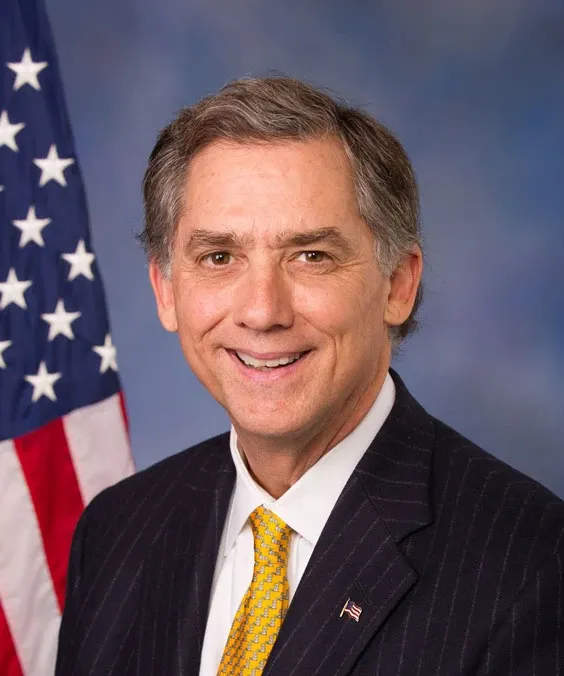
Bruce Eugene Westerman is an American politician serving as the U.S. Representative for Arkansas's 4th congressional district since January 6, 2015. A member of the Republican Party, Westerman has focused on issues such as natural resources, forestry, and environmental policy during his time in office. He has been an advocate for sustainable forestry practices and has worked on legislation aimed at improving the management of public lands. Westerman has also been involved in discussions around economic development and job creation in Arkansas.
Doing so would not only be a benefit to our environment, but would also tremendously help our rural economies.
Many people claim that conservation and economic success are mutually exclusive. However, I believe the two do go hand in hand.
Conservation will ultimately boil down to rewarding the private landowner who conserves the public interest.
We are trying to do something that is actually good for wildlife management and fiscally responsible.
I would be remiss today if I did not thank Representative Dingell for her support for state fish and wildlife agencies.
But in the interest of time, the poster behind me... outlines how natural capital accounting aligns and supports DOI and BLM priorities in the Biden administration.
I have seen preservation cloaked as conservation many times, and I have a real problem with that.
In the name of making things better for the wood products industry, this bill would actually do the opposite.
The facts are when President Biden came into office, he undid every policy that was there that was aimed at securing our border and opened up the border.
Thank you for what you do. Much of what our Committee works on deals with rural America.
These are hearings that we try to do across the country, in many different places, to address the concerns of the Natural Resources Committee.
I have no further requests for time, I am prepared to close, and I continue to reserve the balance of my time.
I have no further requests for time, I am prepared to close, and I reserve the balance of my time.
I have experienced what Mr. Wittman was talking about; you know, excited to be reeling in a fish, and you get it to the boat, and you maybe have a couple of lips and an eyeball and part of a gill. That is all that is left. I don't get to…
I have no further requests for time and continue to reserve the balance of my time.
I again thank the gentleman from Arizona for sponsoring this important legislation. I urge adoption of the bill, and I yield back the balance of my time.
Once again, this is important legislation to reauthorize the Udall Foundation to continue supporting Native American congressional interns, as well as the research and study that goes along with that. As I mentioned earlier, it also works…
This committee is committed to territorial self-determination and improving the livelihoods of all Americans on the islands.
I want to thank them for working tirelessly to bring the issues important to their districts to this committee.
I appreciate all the help that you all provided to us in coming up with the new COFA agreement.
But the relative amount of rise right now compared to 400 feet of rise and fall is hard to fathom.
So, given that Lease Sale 261 was held on December 20, 2023, under the Inflation Reduction Act, your agency can offer offshore wind leases only until December 2024 without another oil and gas sale.
Politicians like Bruce Westerman