It is only after duly apprehending the silent manner in which national characters thus form themselves, that we can rightly appreciate the dislike which old Governments had to trade.
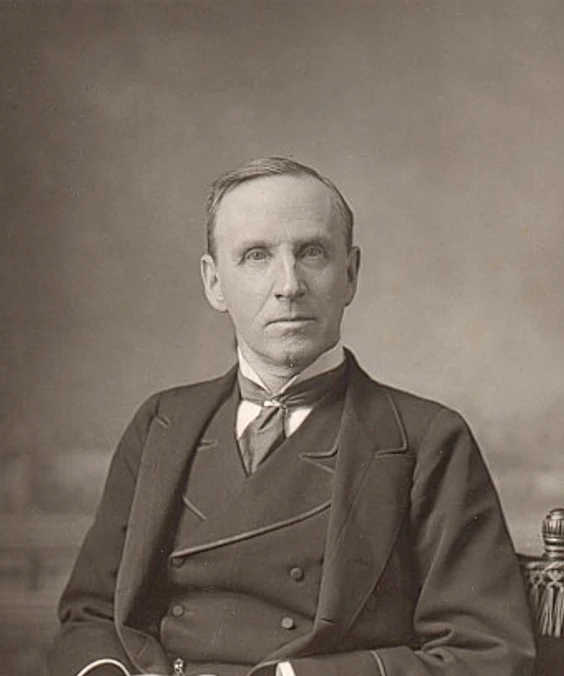
Walter Bagehot
The Public Record
Walter Bagehot was an English journalist, businessman, and essayist, who wrote extensively about government, economics, literature and race. He is known for co-founding the National Review in 1855, and for his works The English Constitution and Lombard Street: A Description of the Money Market (1873).
gutenberg.org
In the origin of states strong and eager individuals got hold of small knots of men, and made for them a fashion which they were attached to and kept.
The tradition ascribing Spartan legislation to Lycurgus was literally untrue, but its spirit was quite true.
When once the predominant type was determined, the copying propensity of man did the rest.
Everybody who weighs even half these arguments will admit that it is a great force in the matter, a principal agency to be acknowledged and watched; and for my present purpose I want no more.
A national character is but the successful parish character; just as the national speech is but the successful parish dialect, the dialect, that is, of the district which came to be more--in many cases but a little more--influential than…
Anybody who inquires will find even in England, and even in these days of assimilation, parish peculiarities which arose, no doubt, from some old accident, and have been heedfully preserved by customary copying.
But even in these useful particulars the innate tendency of the human mind to become like what is around it, has effected much: a sluggish Englishman will often catch the eager American look in a few years; an Irishman or even a German…
The eager restlessness, the highly-strung nervous organisation are useful in continual struggle, and also are promoted by it.
A sort of type of character arose from the difficulties of colonial life--the difficulty of struggling with the wilderness; and this type has given its shape to the mass of characters because the mass of characters have unconsciously…
This is, I think, the very process by which new national characters are being made in our own time.
At first a sort of 'chance predominance' made a model, and then invincible attraction, the necessity which rules all but the strongest men to imitate what is before their eyes, and to be what they are expected to be, moulded men by that…
What is used strengthens; what is disused weakens: 'to those who have, more is given;' and so a sort of style settles upon an age, and imprinting itself more than anything else in men's memories becomes all that is thought of about it.
The Nonconformist writers are neglected, the Conformist writers are encouraged, until perhaps on a sudden the fashion shifts.
What writers are expected to write, they write; or else they do not write at all; but, like the writer of these lines, stop discouraged, live disheartened, and die leaving fragments which their friends treasure, but which a rushing world…
How painfully this traditional style cramps great writers whom it happens not to suit, is curiously seen in Wordsworth, who was bold enough to break through it, and, at the risk of contemporary neglect, to frame a style of his own.
Indeed if he mistakes he is soon weeded out; the editor rejects, the age will not read his compositions.
A writer does not begin to write in the traditional rhythm of an age unless he feels, or fancies he feels, a sort of aptitude for writing it, any more than a writer tries to write in a journal in which the style is uncongenial or…
And not only does the writer, without thinking, choose the sort of style and meaning which are most in vogue, but the writer is himself chosen.
He probably would rather write the traditional style to which the readers of the journal are used, but he does not set himself to copy it; he would have to force himself in order NOT to write it if that was what he wanted.
Everyone who has written in more than one newspaper knows how invariably his style catches the tone of each paper while he is writing for it, and changes to the tone of another when in turn he begins to write for that.
Most men catch the words that are in the air, and the rhythm which comes to them they do not know from whence; an unconscious imitation determines their words, and makes them say what of themselves they would never have thought of saying.
No man, indeed, can think to much purpose when he is studying to write a style not his own.
But definitely aimed mimicry like this is always rare; original men who like their own thoughts do not willingly clothe them in words they feel they borrow.
To some extent, no doubt, this assimilation is effected by a process most intelligible, and not at all curious--the process of conscious imitation; A sees that B's style of writing answers, and he imitates it.
Politicians like Walter Bagehot