What writers are expected to write, they write; or else they do not write at all; but, like the writer of these lines, stop discouraged, live disheartened, and die leaving fragments which their friends treasure, but which a rushing world…
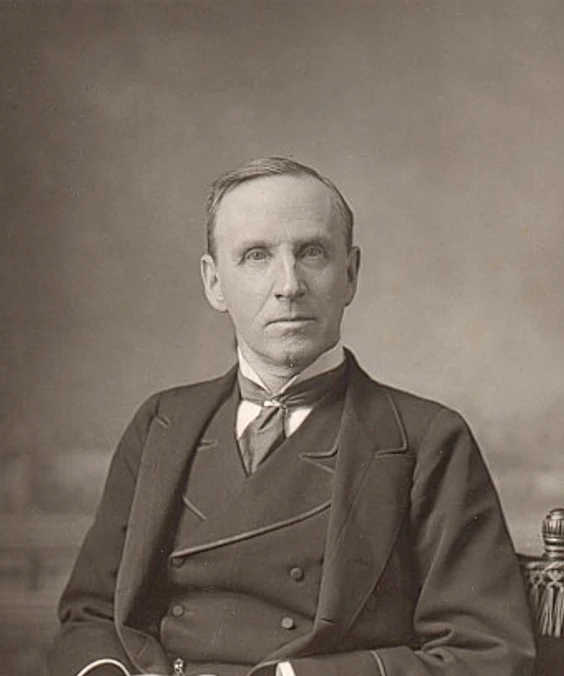
Walter Bagehot
The Public Record
Walter Bagehot was an English journalist, businessman, and essayist, who wrote extensively about government, economics, literature and race. He is known for co-founding the National Review in 1855, and for his works The English Constitution and Lombard Street: A Description of the Money Market (1873).
gutenberg.org
The Nonconformist writers are neglected, the Conformist writers are encouraged, until perhaps on a sudden the fashion shifts.
What is used strengthens; what is disused weakens: 'to those who have, more is given;' and so a sort of style settles upon an age, and imprinting itself more than anything else in men's memories becomes all that is thought of about it.
At first a sort of 'chance predominance' made a model, and then invincible attraction, the necessity which rules all but the strongest men to imitate what is before their eyes, and to be what they are expected to be, moulded men by that…
This is, I think, the very process by which new national characters are being made in our own time.
A sort of type of character arose from the difficulties of colonial life--the difficulty of struggling with the wilderness; and this type has given its shape to the mass of characters because the mass of characters have unconsciously…
The eager restlessness, the highly-strung nervous organisation are useful in continual struggle, and also are promoted by it.
But even in these useful particulars the innate tendency of the human mind to become like what is around it, has effected much: a sluggish Englishman will often catch the eager American look in a few years; an Irishman or even a German…
Anybody who inquires will find even in England, and even in these days of assimilation, parish peculiarities which arose, no doubt, from some old accident, and have been heedfully preserved by customary copying.
A national character is but the successful parish character; just as the national speech is but the successful parish dialect, the dialect, that is, of the district which came to be more--in many cases but a little more--influential than…
Everybody who weighs even half these arguments will admit that it is a great force in the matter, a principal agency to be acknowledged and watched; and for my present purpose I want no more.
When once the predominant type was determined, the copying propensity of man did the rest.
The tradition ascribing Spartan legislation to Lycurgus was literally untrue, but its spirit was quite true.
In the origin of states strong and eager individuals got hold of small knots of men, and made for them a fashion which they were attached to and kept.
It is only after duly apprehending the silent manner in which national characters thus form themselves, that we can rightly appreciate the dislike which old Governments had to trade.
The sea deserved to be hated by the old aristocracies, inasmuch as it has been the mightiest instrument in the civilisation of mankind.' But the old oligarchies had their own work, as we now know.
And to the unconscious imitation which was their principal tool, no impediment was so formidable as foreign intercourse.
Commerce brings this mingling of ideas, this breaking down of old creeds, and brings it inevitably.
It is now-a-days its greatest good that it does so; the change is what we call 'enlargement of mind'.
But in early times Providence 'set apart the nations;' and it is not till the frame of their morals is set by long ages of transmitted discipline, that such enlargement can be borne.
Our habitual instructors, our ordinary conversation, our inevitable and ineradicable prejudices tend to make us think that 'Progress' is the normal fact in human society, the fact which we should expect to see, the fact which we should be…
The ancients had no conception of progress; they did not so much as reject the idea; they did not even entertain the idea.
Savages, again, do not improve; they hardly seem to have the basis on which to build, much less the material to put up anything worth having.
Only a few nations, and those of European origin, advance; and yet these think--seem irresistibly compelled to think--such advance to be inevitable, natural, and eternal.
No doubt history shows that most nations are stationary now; but it affords reason to think that all nations once advanced.
Politicians like Walter Bagehot