They are afraid of reason, for this involves an examination into their own prerogative and, as at least probable, a denunciation of the title by which it is preserved.
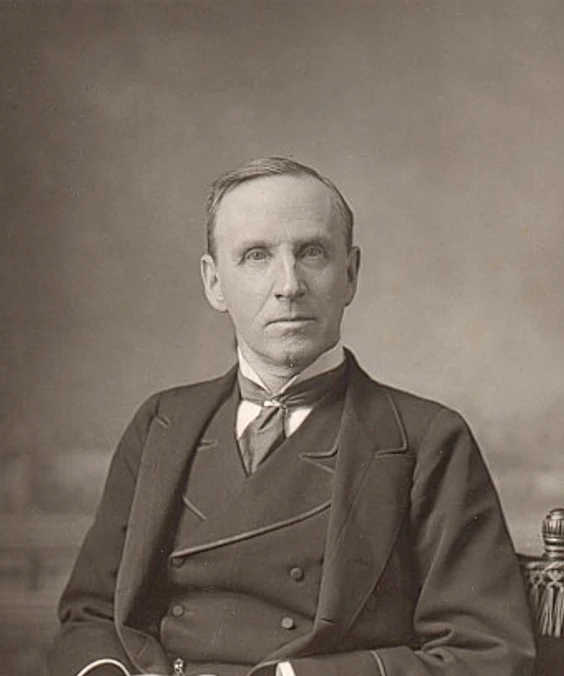
Harold J. Laski
The Public Record
Harold Joseph Laski was an English political theorist and economist. He was active in politics and served as the chairman of the British Labour Party from 1945 to 1946 and was a professor at the London School of Economics from 1926 to 1950. He first promoted pluralism by emphasising the importance of local voluntary communities such as trade unions. After 1930, he began to emphasize the need for a workers' revolution, which he hinted might be violent. Laski's position angered Labour leaders who promised a nonviolent democratic transformation. Laski's position on democracy-threatening violence came under further attack from Prime Minister Winston Churchill in the 1945 UK general election, and the Labour Party had to disavow Laski, its own chairman.
gutenberg.org
Their mental habits resemble nothing so much as the horrified timidity which persuaded Hobbes to find in despotism the only cure for social disagreement.
So the ancient régime moves relentlessly to its destruction.
It is too late because the price of conciliation is the sacrifice of precisely the vested interests with which the government is in partnership.
But neither boldness nor severity can stem that tide.
They fear the novelty and they seek to suppress it, in the belief that a bold front and an adequate severity will stem the tide of critical scepticism.
Everyone who seeks to penetrate below the surface sees some vast calamity ahead.
An unequal society always lives in fear, and with a sense of impending disaster in its heart.
And if this agreement is absent how can we, at least over a considerable period, hope to move on our way in peace?
If we have a society of unequals, how can we agree either about means or ends?
Remember that Treitzschke’s eulogy of blood and iron is a picture of the same Germany as that which Bebel and Liebkneckt sought to overthrow.
Think of the America of President Coleridge’s speeches, and the America as bitterly described by Mr Sinclair Lewis.
Its values will be so distorted, its apparatus for magnifying that distortion so complete, that it is blinded to the realities which confront it.
For me, at least, essentially that a society pervaded by the fact of unequality is bound to deny freedom and, therefore, to provoke conflict.
What Keir Hardie did for the miners of Ayrshire, what Sidney Hillman has done for the garment workers of America, are as epic and as creative, in their way, as the work of Garibaldi and Mazzini.
For the poor, their voluntary organizations evoke the same kind of impassioned loyalty as a nation struggling to be free is able to win from its members.
The point I am seeking to make was summarized with the insight of genius by Disraeli when he spoke of the rich and poor as in fact two nations.
What the government will represent as disloyalty to the state will seem to trade unionists a service which is freedom.
And until the policy of the state meets that experience with similar profundity conflict between the government and the trade union will rarely involve the desertion by the members of the association they have themselves made.
The reason lies in the degree to which the trade union expresses the intimate experience of its members.
Even the blunders of their leaders meet with a pardon far more generous than would be extended to the political heads of the state.
Few states--it is surely a significant thing--have ever won from their subjects a loyalty so profound as the Miners’ Federation of Great Britain, or the trade unions in the cotton trades.
Its members see in its activities the expression of the power for which they are individually searching.
That is the secret of the profound allegiance trade unionism is able to create.
But they are bound to be at least apathetic, and possibly hostile, when the sense is wide and deep that they are no more than its instruments.
Politicians like Harold J. Laski