Both forms of behaviour do real injury to him; neither produces an attitude of conviction.
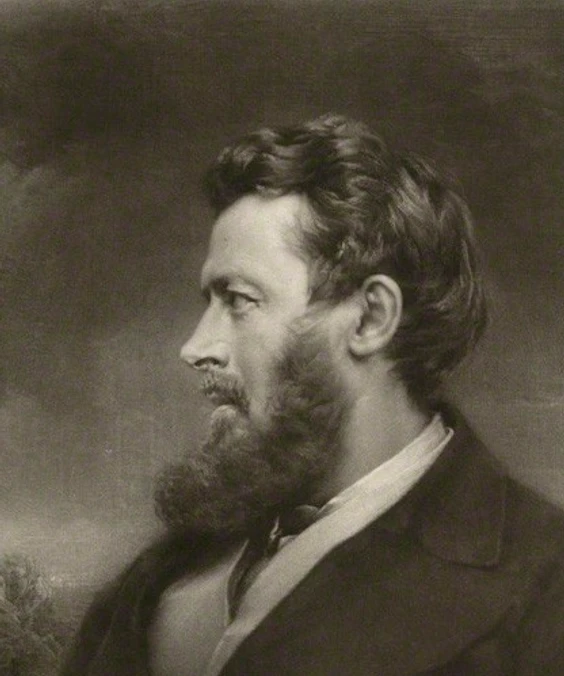
Harold J. Laski
The Public Record
Harold Joseph Laski was an English political theorist and economist. He was active in politics and served as the chairman of the British Labour Party from 1945 to 1946 and was a professor at the London School of Economics from 1926 to 1950. He first promoted pluralism by emphasising the importance of local voluntary communities such as trade unions. After 1930, he began to emphasize the need for a workers' revolution, which he hinted might be violent. Laski's position angered Labour leaders who promised a nonviolent democratic transformation. Laski's position on democracy-threatening violence came under further attack from Prime Minister Winston Churchill in the 1945 UK general election, and the Labour Party had to disavow Laski, its own chairman.
gutenberg.org
From the angle of character, the only rules of conduct in this realm that work, are those that are self-imposed.
The power of law to define modes of social conduct depends very largely upon its ability to command a sentiment of general approval.
What it seeks to do must broadly commend itself, on rational grounds, to those over whose lives its principles are to preside.
Legislation which does not fulfil this condition is always unsuccessful, and always has the result of bringing the idea of law itself into contempt.
For where a particular statute is regarded as foolish or obnoxious by a considerable body of persons, they will rejoice in breaking it.
Illegal conduct becomes a matter even of pride.
It becomes a principle of conduct which gives rise to special pleasure and peculiarly satisfies human vanity.
They wear a breach of the law as a badge of courage, like the revolutionary in Czarist Russia or the suffragette in pre-war England; and the imposition of penalties upon them arouses in them and their friends a sense of angry injustice.
Now I think it is an elementary principle of penal psychology that you cannot make a crime of conduct which people do not a priori regard as criminal.
Popular sentiment approves a law against murder, and you can enforce that law.
But popular sentiment, in England at least, would not, in my judgment, approve a law forbidding the manufacture and sale of alcoholic liquor; and its chief result would be to direct the minds of thousands to the problem of ways and means…
It loosens all the principles of conduct which make for social peace by making us think of the rules under which we live as unjustifiable and oppressive.
It persuades it to think out mean and petty expedients for the enforcement of the law in the same way as its subjects think out mean and petty expedients for its evasion.
Few things are more detrimental than this to the moral equilibrium of a social order.
A government which is continually flouted in its attempt at administration is bound to attempt even greater severity.
It does not result in the satisfactory enforcement of the law, but in its wider evasion.
Severity on one side is met by brutality upon another; one might as well be hung for a sheep as a lamb.
And the disproportion between crime and punishment which emerges draws the sympathy of the general population away from the government to the offender.
This is, I suggest, wholly bad for any society.
It becomes inacceptable to an ever-increasing circle who, while they may sympathize with its principle, are not prepared to acquiesce in the price that has to be paid for its application.
Not only, sooner or later, does such legislation perish, but the habits to which it gives rise persist, and are frequently carried over into realms where they are still more undesirable.
And the severity which a government is tempted to practise makes it blind to wrong through becoming inured to its consequences.
But the whole procedure had the serious result of making the public expect that any hunger-strike would be a dramatic battle between the government and its prisoner, in which the cause of the imprisonment was lost sight of in the gamble of…
The public, accordingly, was not greatly moved by the hunger-striking which took place during the Irish Revolution; and when Mr Lloyd George left the Lord Mayor of Cork to die, people were more interested in the circumstance of his death…
Politicians like Harold J. Laski