But I should not agree that a general strike is unjustified to secure the eight-hour day, or to protect the payment of unemployment relief, or to continue the Trade Board system in sweated industries.
Harold J. Laski
The Public Record
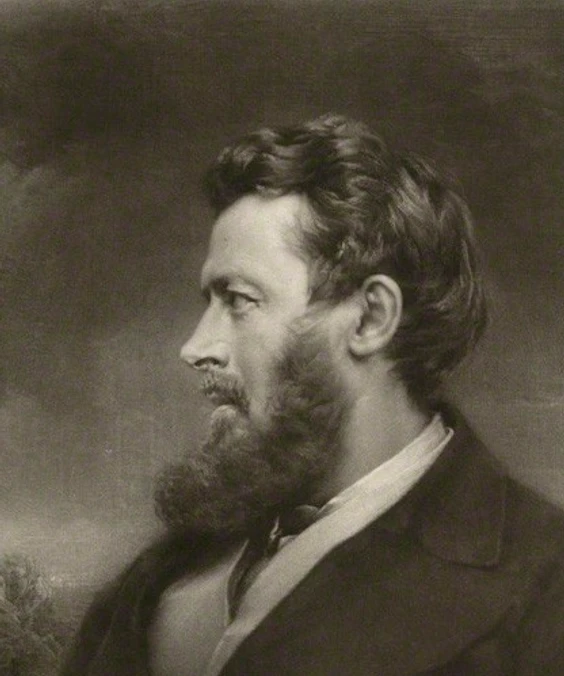
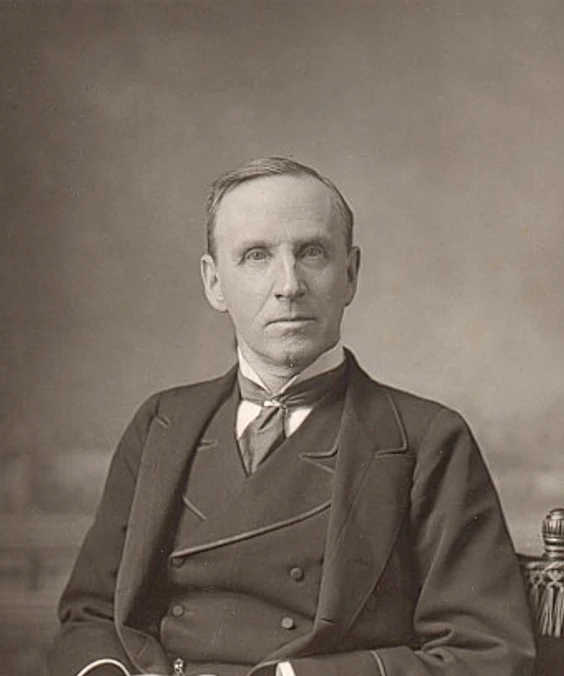
Harold Joseph Laski was an English political theorist and economist. He was active in politics and served as the chairman of the British Labour Party from 1945 to 1946 and was a professor at the London School of Economics from 1926 to 1950. He first promoted pluralism by emphasising the importance of local voluntary communities such as trade unions. After 1930, he began to emphasize the need for a workers' revolution, which he hinted might be violent. Laski's position angered Labour leaders who promised a nonviolent democratic transformation. Laski's position on democracy-threatening violence came under further attack from Prime Minister Winston Churchill in the 1945 UK general election, and the Labour Party had to disavow Laski, its own chairman.
gutenberg.org
That it cannot in any circumstances be justified I am not prepared to say until I know the circumstances of some given case.
I am not willing, for instance, to condemn the General Strike of 1926; on a careful analysis of its history, I believe that the blame for its inception lies wholly at the door of the Baldwin Government.
No one acquainted with the character of the trade union movement but knows that a weapon so tremendous as the general strike will only be called into play on the supreme occasion.
To lay it down as law that, whatever the occasion, the weapon shall not be used, seems to me an unjustifiable interference with freedom.
There are occasions when that coercion is necessary, and even essential.
The trade unions would never have called the strike had they seen in the policy of the government even the fragment of a genuine search for justice.
But the fact was that Mr Baldwin and his colleagues simply acted as the mouthpiece of the coalowners.
To illegalize a general strike in that background is to say that the trade unions should have acquiesced in the defeat of the miners without an attempt to prove their solidarity with them.
It would be to announce to government that the ultimate weapon of Labour is one the use of which it need never fear.
In the largest sense, his questions are still our own.
The emphasis, now as then, is upon the problem of freedom.
The problem, now as then, was its translation into institutional terms.
It is the glory of Locke that he brought a generous patience and a searching wisdom to the solution he proffered to his generation.
Toleration of some kind was rapidly becoming inevitable; and with a Calvinist upon the throne persecution of, at any rate, the Presbyterians became finally impossible.
Yet the definition of what limits were to be set to toleration was far from easy.
Did such partnership imply exclusion from its privilege for all who could not accept the special brand of religious doctrine?
Locke, at least, denied the assumption, and argued that since Churches are voluntary societies, they cannot and ought not to have reciprocal relation with the State.
But Locke's theory was meat too strong for the digestion of his time; and no statesman would then have argued that a government could forego the advantage of religious support.
It is a fact inevitable in the situation of the English Church that the charge of subjection to the State should rouse a deep and quick resentment.
She cannot be a church unless she is a societas perfecta; she cannot have within herself the elements of perfect fellowship if what seem the plain commands of Christ are to be at the mercy of the king in Parliament.
In some sort, it is the problem of sovereignty that is here at issue; and it is in this sense that the problems of the Revolution are linked with the Oxford Movement.
Yet the real interest of the Nonjuring schism was political rather than religious; and its roots go out to vital events of the past.
That theory, which was the main weapon of the early secular state against the pretensions of Rome, must naturally have commanded the allegiance of members of a church which James I, its main exponent, had declared of vital import to his…
For it was upon the monarchy that the Church had come to depend for its existence; and if resistance to the king were made, as Knox and Bellarmine had in substance made it, the main weapon of the dissenting churches there was little hope…
Politicians like Harold J. Laski