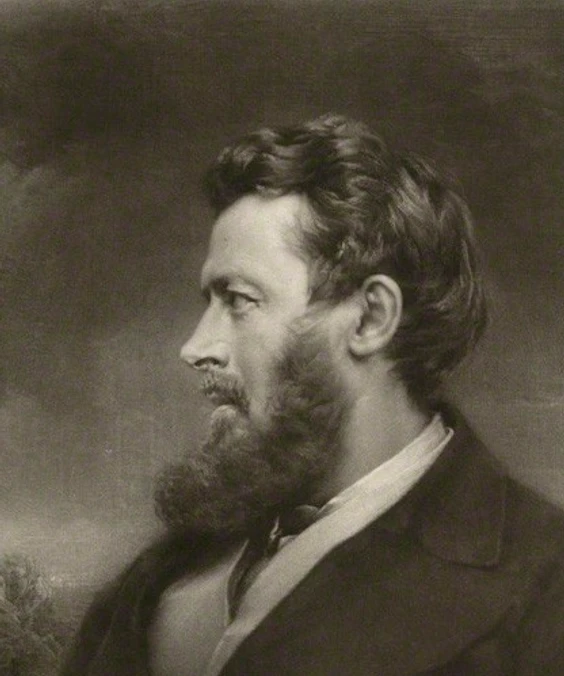
Society is one and indivisible; and the defects do not at any point impair the ultimate integrity of the social bond.
Harold J. Laski
The Public Record
Harold Joseph Laski was an English political theorist and economist. He was active in politics and served as the chairman of the British Labour Party from 1945 to 1946 and was a professor at the London School of Economics from 1926 to 1950. He first promoted pluralism by emphasising the importance of local voluntary communities such as trade unions. After 1930, he began to emphasize the need for a workers' revolution, which he hinted might be violent. Laski's position angered Labour leaders who promised a nonviolent democratic transformation. Laski's position on democracy-threatening violence came under further attack from Prime Minister Winston Churchill in the 1945 UK general election, and the Labour Party had to disavow Laski, its own chairman.
gutenberg.org
Yet it is surely evident that in the heat and stress of social life, we cannot afford so long a period as the basis for our judgment.
We may well enough regard the corruption of the monarchy under the later Hanoverians as the necessary prelude to its purification under Victoria; but that does not make it any the less corrupt.
We may even see how a monistic view of society is possible to one who, like Burke, is uniquely occupied with the public good.
They were surely to be pardoned if, reading the Reflections of Burke, they regarded class distinctions as more vital than their harmony of interest, when they saw the tenacity with which privileges they did not share were defended.
It is even possible to understand why some insisted that if those privileges were, as Burke had argued, essential to the construction of the whole, it was against that whole, alike in purpose and in realization, that they were in revolt.
They could not but ask for happiness in their own individual lives no less than in the State of which they were part.
They came to see that without self-government in the sense of their own active participation in power, such happiness must go unfulfilled.
The State, in fact, may have the noblest purpose; but its object is attempted by agents who are also mortal men.
Perspective apart, he is destined doubtless to live rather as the author of some maxims that few statesmen will dare to forget than as the creator of a system which, even in its unfinished implications, is hardly less gigantic than that of…
His unhesitating inability to see how dangerous is the concentration of property is standing proof that men are over-prone to judge the rightness of a State by their own wishes.
His own contempt for the results of reasonable inquiry is a ceaseless lesson in the virtue of consistent scrutiny of our inheritance.
His disregard of popular desire suggests the fatal ease with which we neglect the opinion of those who stand outside the active centre of political conflict.
He brought to the political philosophy of his generation a sense of its direction, a lofty vigour of purpose, and a full knowledge of its complexity, such as no other statesman has ever possessed.
His flashes of insight are things that go, as few men have ever gone, into the hidden deeps of political complexity.
Yet, when the last word of criticism has been made, the balance of illumination is immense.
He illustrates at its best the value of that party-system the worth of which made so deep an impression on all he wrote.
He showed also that allegiance to party is never inconsistent with the deeper allegiance to the demand of conscience.
When he came to the House of Commons, the prospects of representative government were very dark; and it is mainly to his emphasis upon its virtues that its victory must be attributed.
The Industrial Revolution is hardly less a fundamental change in the habits of English thought than in the technique of commercial production.
Alongside the discoveries of Hargreaves and Crompton, the ideas of Hume and Adam Smith shifted the whole perspective of men's minds.
The movement for religious toleration is not only paralleled in the next century by the movement for economic freedom, but is itself in a real sense the parent of the latter.
When the roots of religious freedom had been secured, it was easy for them to transfer their argument to the secular sphere.
Nothing, indeed, is more important in the history of English political philosophy than to realize that from Stuart times the Nonconformists were deeply bitten with distrust of government.
What the Nonconformists wanted was to be left alone; and Davenant explained the root of their desire when he tells of the gaols crowded with substantial tradesmen whose imprisonment spelt unemployment for thousands of workmen.
Politicians like Harold J. Laski