A common political superior there doubtless must be; but government is an organ to which omnipotence is wanting.
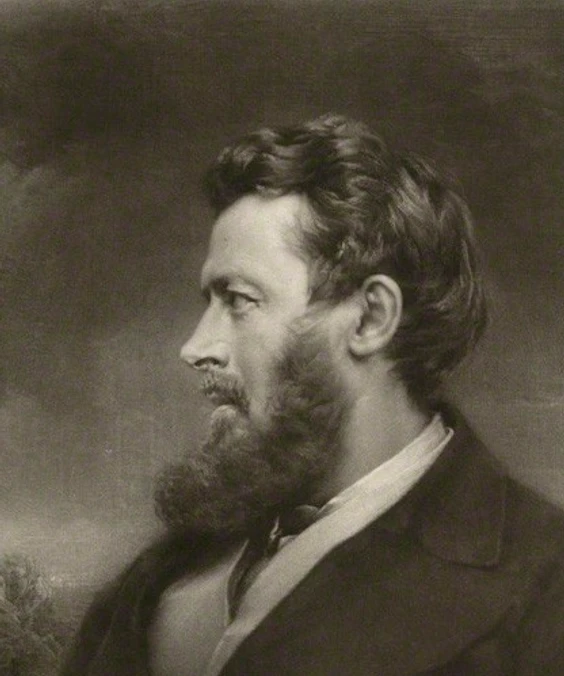
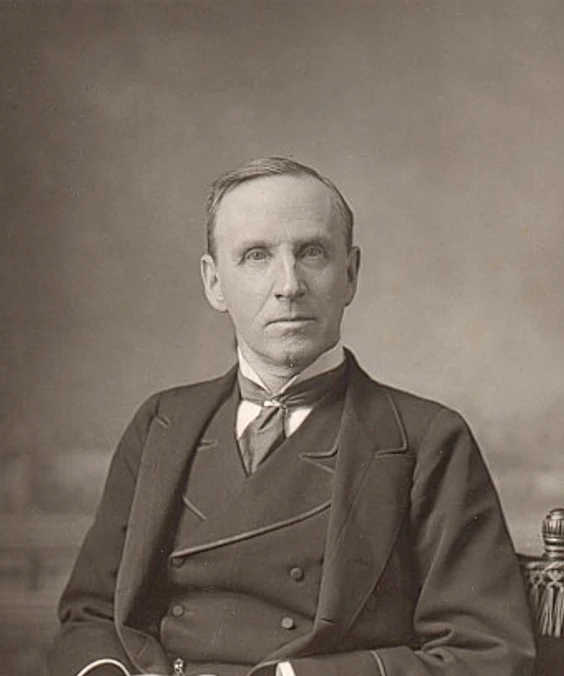
Harold J. Laski
The Public Record
Harold Joseph Laski was an English political theorist and economist. He was active in politics and served as the chairman of the British Labour Party from 1945 to 1946 and was a professor at the London School of Economics from 1926 to 1950. He first promoted pluralism by emphasising the importance of local voluntary communities such as trade unions. After 1930, he began to emphasize the need for a workers' revolution, which he hinted might be violent. Laski's position angered Labour leaders who promised a nonviolent democratic transformation. Laski's position on democracy-threatening violence came under further attack from Prime Minister Winston Churchill in the 1945 UK general election, and the Labour Party had to disavow Laski, its own chairman.
gutenberg.org
So far as there is a sovereign at all in Locke's book, it is the will of that majority which Rousseau tried to disguise under the name of the general will; but obviously the conception lacks precision enough to give the notion of…
Government, he says, in substance, is a trustee and trustees abuse their power; let us therefore divide it as to parts and persons that the temptation to usurp may be diminished.
The American history of the separation of powers has most largely been an attempt to bridge them; and all that has been gained is to drive the best talent, save on rare occasion, from its public life.
For the larger part of the modern world, his argument is acceptable enough; and its ingenious compromises have made it especially representative of the English temper.
His conception of the visible church as no part of the essence of religion could win no assent from even a moderate Anglican; and, once the visible church is admitted, Locke's facile distinction between Church and State falls to the ground.
Nor can it be doubted that he underestimated the power of coercion to produce assent; the policy of Louis XIV to the Huguenots may have been brutal, but its efficacy must be unquestionable.
And it is at least doubtful whether his theory has any validity for a man who held, as Roman Catholics of his generation were bound to hold, that the communication of his particular brand of truth outweighed in value all other questions.
No one can read the Second Treatise without perceiving that Locke looked upon the State as a machine which can be built and taken to pieces in very simple fashion.
Herein, undoubtedly, he over-simplified the problem; and that made him miss some of the cardinal points a true psychology of the State must seize.
It resulted in his failure to perceive how complex is the mass of motives imbedded in the political act.
For it needed the demonstration by Darwin of the kinship of man and beast for us to see the real substance of Aristotle's vision that man is embedded in political society.
For most, the Revolution was a final settlement, and Locke was welcome as a writer who had discovered the true source of political comfort.
The most splendid of all sciolists was still to use his book for the outline of a social contract more daring even than his own.
Yet Locke's own weapons were being turned against him and what was permanent in his work was being cast into the new form required by the time.
The failure of England in the American war was already evident; and it was not without justice that he looked to Locke as the author of their principles.
Burke took up the work thus begun; and after he had dealt with the contract theory it ceased to influence political speculation in England.
Its place was taken by the utilitarian doctrine which Hume had outlined; and once Bentham's Fragment had begun to make its way, a new epoch opened in the history of political ideas.
Locke might, indeed, claim that he had a part in this renaissance; but, once the influence of Burke had passed, it was to other gods men turned.
For Bentham made an end of natural rights; and his contempt for the past was even more unsparing than Locke's own.
It is more instructive to compare his work with Hobbes and Rousseau than with later thinkers; for after Hume English speculation works in a medium Locke would not have understood.
Clearly enough, he has nothing of the relentless logic which made Hobbes' mind the clearest instrument in the history of English philosophy.
If Hobbes' theory of sovereignty is today one of the commonplaces of jurisprudence, ethically and politically we occupy ourselves with erecting about it a system of limitations each one of which is in some sort due to Locke's perception.
If we reject Locke's view of the natural goodness of men, Hobbes' sense of their evil character is not less remote from our speculations.
And anyone who surveys the history of Church and State in America will be tempted to assert that in the last hundred years the separateness for which Locke contended is not without its justification.
Politicians like Harold J. Laski