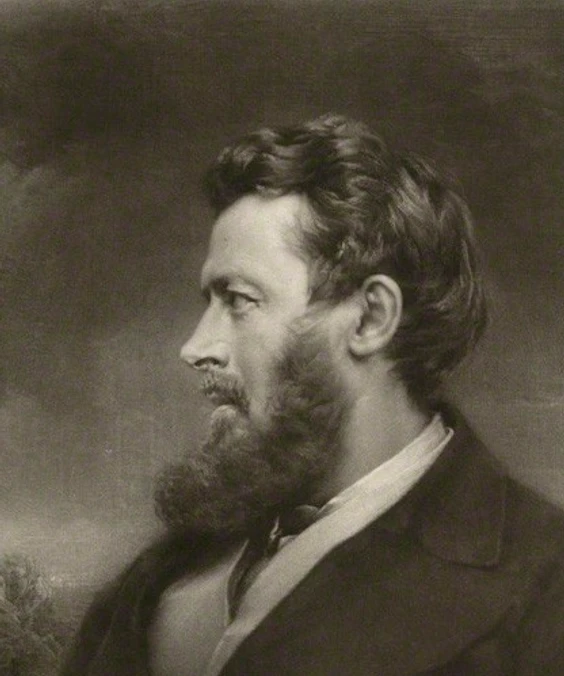
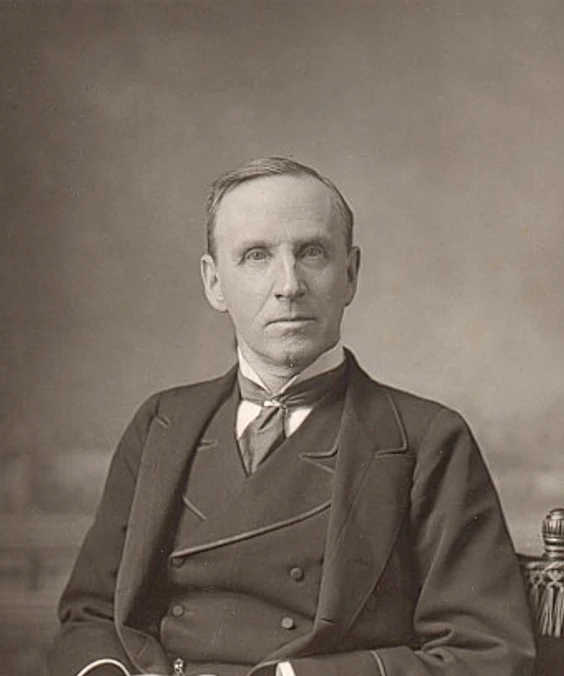
Here, indeed, we meet less with opinion than with a set of gloomy prejudices, acceptable only because of the stout honesty of the source from which they come.
Harold J. Laski
The Public Record
Harold Joseph Laski was an English political theorist and economist. He was active in politics and served as the chairman of the British Labour Party from 1945 to 1946 and was a professor at the London School of Economics from 1926 to 1950. He first promoted pluralism by emphasising the importance of local voluntary communities such as trade unions. After 1930, he began to emphasize the need for a workers' revolution, which he hinted might be violent. Laski's position angered Labour leaders who promised a nonviolent democratic transformation. Laski's position on democracy-threatening violence came under further attack from Prime Minister Winston Churchill in the 1945 UK general election, and the Labour Party had to disavow Laski, its own chairman.
gutenberg.org
He did not believe in the honesty of republicans; they levelled down, but were never inclined to level up.
Men, he felt, had a part to act in society, and their business was to fulfil their allotted station.
There is, indeed, in all his political observations a strong sense of the virtue of order, and a perception that the radicalism of the time was too abstract to provide an adequate basis for government.
What he did not see was the important truth that in no age are fundamental questions raised save where the body politic is diseased.
Rousseau and Voltaire, even Priestley and Price, require something more for answer than unreasoned prejudice.
Thought, after all, is the one certain weapon of utility in a different and complex world; and it was because the age refused to look it in the face that it invited the approach of revolution.
It is the special merit of the English constitutional system that the king stands outside the categories of political conflict.
He is the dignified emollient of an organized quarrel which, at least in theory, is due to the clash of antagonistic principle.
Yet the first twenty-five years of George III's reign represent the deliberate effort of an obstinate man to stem the progress of fifty years and secure once more the balance of power.
Nor was the effort defeated without a struggle which went to the root of constitutional principle.
Men like Bolingbroke, Carteret and the elder Pitt were all of them dissatisfied with a system which depended for its existence upon the exclusion of able men from power.
A generation of corrupt practice and the final defeat of Stuart hopes had already deprived the Whigs of any special hold on their past ideals.
Government by connection proved itself irreconcilable with good government.
But it showed also that once corruption was centralized there was no limit to its influence, granted only the absence of great questions.
What made it worse, and finally impossible, was the character of the king.
He trusted no one but himself, and he totally misunderstood the true nature of his office.
There is no question which arose in the first forty years of his reign in which he was not upon the wrong side and proud of his error.
He was wrong about Wilkes, wrong about America, wrong about Ireland, wrong about France.
He attacked every measure for the purification of the political system.
He supported the Slave trade and he opposed the repeal of the Test Act.
He prevented the grant of Catholic emancipation at the one moment when it might have genuinely healed the wounds of Ireland.
He destroyed by his perverse creations the value of the House of Lords as a legislative assembly.
In the Wilkes affair he threw the clearest light of the century upon the true nature of the House of Commons.
But we cannot understand the eighteenth century, or its theories, unless we realize that its temper was still dominantly aristocratic.
Politicians like Harold J. Laski