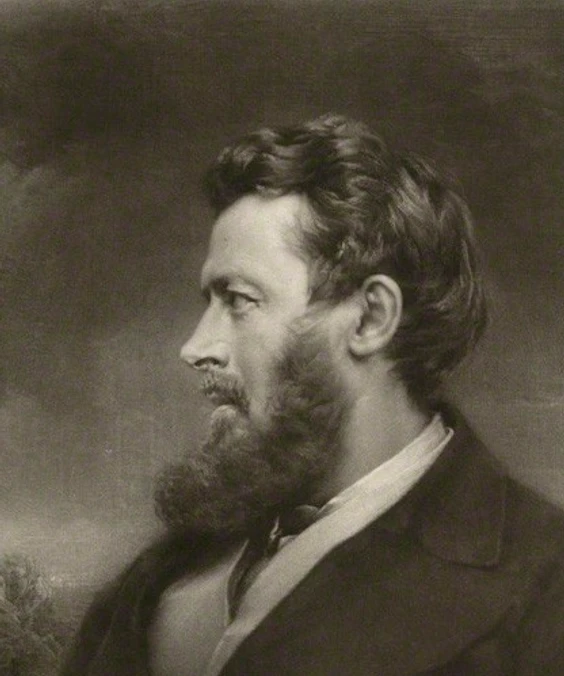
What he was doing was to deprive the priesthood of claims to supernatural authority that he might vindicate for civil government the right to preserve itself not less against persons in ecclesiastical office than against civil assailants.
Harold J. Laski
The Public Record
Harold Joseph Laski was an English political theorist and economist. He was active in politics and served as the chairman of the British Labour Party from 1945 to 1946 and was a professor at the London School of Economics from 1926 to 1950. He first promoted pluralism by emphasising the importance of local voluntary communities such as trade unions. After 1930, he began to emphasize the need for a workers' revolution, which he hinted might be violent. Laski's position angered Labour leaders who promised a nonviolent democratic transformation. Laski's position on democracy-threatening violence came under further attack from Prime Minister Winston Churchill in the 1945 UK general election, and the Labour Party had to disavow Laski, its own chairman.
gutenberg.org
For if that assumption is made we grant to fallible men privileges which confessedly belong to persons outside the category of fallibility.
It is, in fact, an imperium in imperio and its conflict with the state is inevitable.
The Church, he claims, is not a visible society, presided over by men who have authority directly transmitted by Christ.
For whoever hath such an authority of making laws is so far a king, and whoever can add new laws to those of Christ, equally obligatory, is as truly a king as Christ himself.
Nay, whosoever hath an absolute authority to interpret any written or spoken laws, it is he who is truly the lawgiver to all intents and purposes, and not the person who first wrote and spoke them.
The true Church of Christ is in heaven; and the members of the earthly society can but try in a human, blundering way, to act with decency and justice.
Apostolic succession, the power of excommunication, the dealing out of forgiveness for men's sins, the determination of true doctrine, insofar as the Church claims these powers, it is usurping an authority that is not its own.
The relation of man to God is his private affair, and God will ask from him sincerity and honesty, rather than judge him for his possession of some special set of dogmas.
Clearly, therefore, if the Church is no more than this, it has no supernatural pretensions to oppose to the human claims of the State.
And since the State must have within itself all the means of sufficient life, it has the right to resist the ecclesiastical onslaught as based upon the usurpation of power assumed without right.
In such an aspect, it would clearly follow that the Church has no monopoly of truth.
It can, indeed, judge its own beliefs; but reason alone can demonstrate the inadequacy of other attitudes.
Nor does its judgment preclude the individual duty to examine into the truth of things.
The real root of faith is not the possession of an infallible dogma, but the arriving honestly at the dogma in which you happen to believe.
And if sincerity alone is to count as the test, then there cannot, for the existing world, be any such thing as objective religious truth.
It subverted not merely absolute authority--which the Church of England did not claim--but any authority in the Church.
It impugned the authority of the Crown to enforce religious belief by civil penalties.
The authority the Church possesses is inherent in the very nature of the Church; for the obligation to a belief in Christianity is the same thing as to a belief in that Church which can be shown to represent Christ's teaching.
For if it is sincerity which is alone important it would follow that things false and wrong are as acceptable to God as things true and right, which is patently absurd.
The State, in fact, may respect conscience, but Hoadly is no more entitled to assume the infallibility of private belief than he is to deny the infallibility of the Church's teaching.
The Church is a society distinct from the State, but lending to that body its assistance because without the sanction of religion the full achievement of the social purpose is impossible.
Yet the theory was the parent of liberty, if only because it pointed the way to a balance of power between claims which, before, had seemed mutually exclusive.
So that the Erastianism of the eighteenth century goes deep enough to make the Church no more than a moral police department of the State.
But we cannot understand the eighteenth century, or its theories, unless we realize that its temper was still dominantly aristocratic.
Politicians like Harold J. Laski