We should remember that civilization is, at best, a fragile thing, and that to embark upon a challenge to order is to threaten what little security it has.
Harold J. Laski
The Public Record
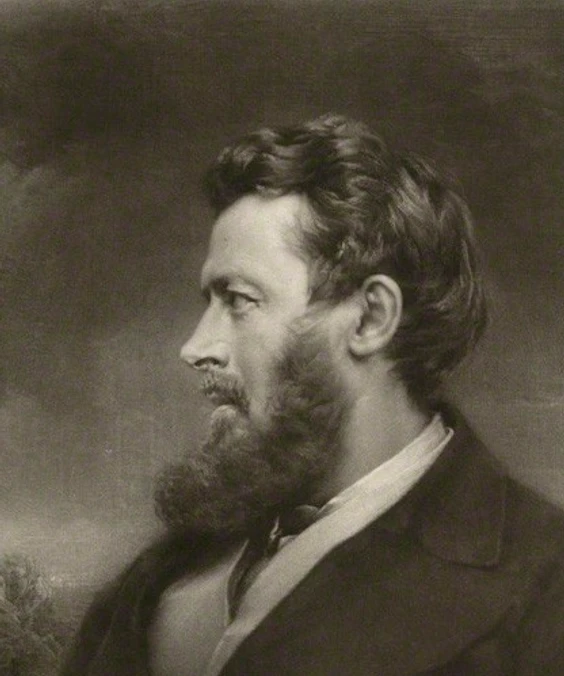
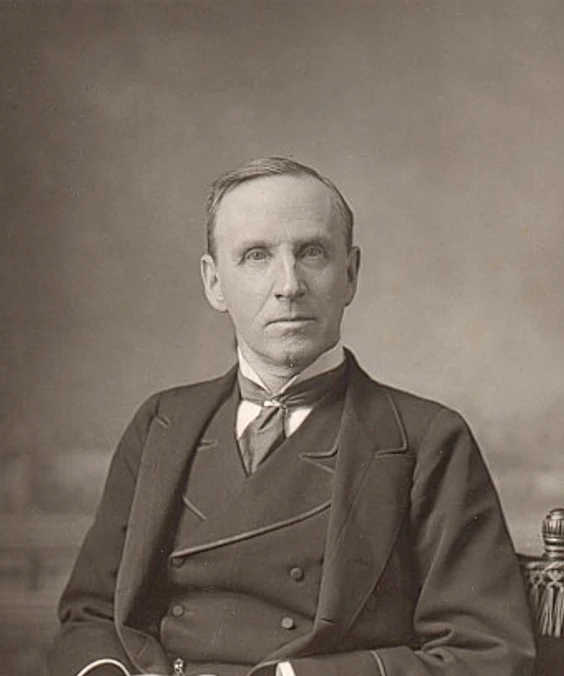
Harold Joseph Laski was an English political theorist and economist. He was active in politics and served as the chairman of the British Labour Party from 1945 to 1946 and was a professor at the London School of Economics from 1926 to 1950. He first promoted pluralism by emphasising the importance of local voluntary communities such as trade unions. After 1930, he began to emphasize the need for a workers' revolution, which he hinted might be violent. Laski's position angered Labour leaders who promised a nonviolent democratic transformation. Laski's position on democracy-threatening violence came under further attack from Prime Minister Winston Churchill in the 1945 UK general election, and the Labour Party had to disavow Laski, its own chairman.
gutenberg.org
All this may be true, and yet it seems to me to leave the individual no option but to follow conscience as the guide to civic action.
Those who accept commands they know to be wrong, make it easier for wrong commands to be accepted.
Those who are silent in the presence of injustice are in fact part-authors of it.
It is to be remembered that even a decision to acquiesce is a decision, that what shapes the substance of authority is what it encounters.
If it meets always with obedience, sooner or later it will assume its own infallibility.
When that moment comes, whatever its declared purpose, the good it will seek will be its own good and not that of those involved in its operations.
Liberty means being faithful to oneself, and it is maintained by the courage to resist.
This, and this only, gives life to the safeguards of liberty; and this only is the clue to the preservation of genuine integrity in the individual life.
If it is objected that this is a doctrine of contingent anarchy, that it admits the right of men to rebellion, my answer is that the accusation is true.
Power is not conferred upon men for the sake of power, but to enable them to achieve ends which win happiness for each of us.
We have to act by the dictates of our conscience knowing, as Washington knew, as the early Christians recognized, that the penalties of failure are terrible.
But we can so act, also, knowing that there is a sense in which no man who serves his conscience ever fails.
For by that service he becomes a free man, and his freedom is a condition of other men’s freedom.
There is immense significance in the fact that those who fought for religious liberty were the unconscious progenitors of civil liberty also.
When they demanded the right to worship the God they knew, in their own mind they were insisting that in one sphere, at least, of human experience, their own perception must count as ultimate.
They consecrated freedom to the service of God.
To fight for the assurance that a man may do his duty as he conceives it is not only to fight for freedom, but for all the ends which the emancipation of mankind seeks to attain.
I do not know whether liberty is the highest objective we can serve.
I do assert that no other great purpose is possible of achievement save in the terms of fellowship with freedom.
I have sought, so far, to show that, however important be the political mechanisms on which liberty depends, they will not work of themselves.
They depend for their creativeness upon the presence in any given society of a determination to make them work.
The knowledge that an invasion of liberty will always meet with resistance from men determined upon its repulsion, this, in the last analysis, is the only true safeguard that we have.
It means, I have admitted, that a certain penumbra of contingent anarchy always confronts the state; but I have argued that this is entirely desirable since the secret of liberty is always, in the end, the courage to resist.
But we cannot understand the eighteenth century, or its theories, unless we realize that its temper was still dominantly aristocratic.
Politicians like Harold J. Laski