Those who hold them are not anxious to abandon what they entail; sometimes they can even persuade themselves that the well-being of society depends upon a refusal to surrender them.
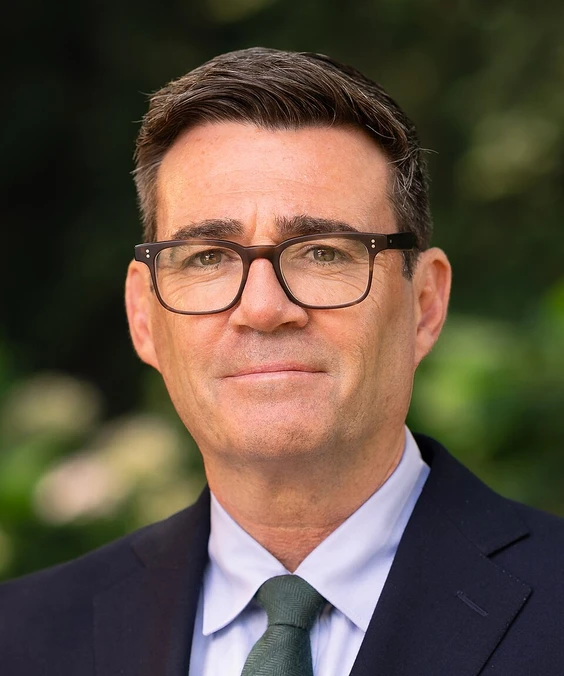
Harold J. Laski
The Public Record
Harold Joseph Laski was an English political theorist and economist. He was active in politics and served as the chairman of the British Labour Party from 1945 to 1946 and was a professor at the London School of Economics from 1926 to 1950. He first promoted pluralism by emphasising the importance of local voluntary communities such as trade unions. After 1930, he began to emphasize the need for a workers' revolution, which he hinted might be violent. Laski's position angered Labour leaders who promised a nonviolent democratic transformation. Laski's position on democracy-threatening violence came under further attack from Prime Minister Winston Churchill in the 1945 UK general election, and the Labour Party had to disavow Laski, its own chairman.
gutenberg.org
We are in the difficulty that every step we take towards freedom is a step towards the equalization of privileges now held unequally.
The sense of solidarity comes only when the result of joint action impinges equally on the common life.
Trade unionists appreciate a demand for higher wages more keenly than employers: the wealthy rentier reads of a strike in the cotton trade as a newspaper incident, of a railway dispute, whatever its grounds, as a threat to the community.
The less we live in the experience of our neighbours, the less shall we feel wrong in the denial of their wants.
But the sense of bitterness or injustice that comes from bad housing, low wages, or the denial of an adequate political status, these we are able to remedy by social action.
Whatever the motive of abstention, let us remember that men think differently who live differently, and that, as they think, so they build principles of action to remedy what, in their lives, they find bitter or unjust, to preserve what…
The workman may be afraid for his job; Babbitt may shrink from being shunned by the group whose fellowship is his life; it may be the handful of silver, the riband for the coat, the love of power, the loathing of what freedom may bring.
Life is so complex and tangled and full, that those who desire to abstain from the battle for freedom can always find ample excuse.
There is no myth we are not capable of inventing to lull our conscience.
They will persuade themselves that those others are contented with their lot, or made differently in nature, so that they are unfit to enjoy what others possess.
Where those results are already possessed by some, they seldom have the imagination to see the consequence of their denial to others.
The inference I would draw is the quite basic one that in any society men only have an equal interest in freedom when they have an equal interest in its results.
The will to freedom, like the will to power, is a habit, and it perishes of atrophy.
Not the least powerful to silence, you will recollect, which persuaded even those who thought Sacco and Vanzetti innocent was their fear that proof of that innocence might disturb popular faith in the Massachusetts Courts.
Everywhere they have been guilty of definite error, or wrong, they have denied the error or wrong, lest it upset faith in their own right to power.
They have, in the past, fought every step on every road to freedom because they have seen that the accumulation of small concessions will, in the end, be their defeat.
Every postponement we accept, every failure before which we are dumb, only consolidates the forces that are hostile to freedom.
We do not legislate for some conceivable Utopia to be born in some unimaginable time, but for the kind of world we know ourselves, for lives like our own lives.
Those who profit by that deception are, at the moment, the masters of society.
In our own day it would not be an unfair description of education to define it as the art which teaches men to be deceived by the printed word.
They do not want the general population so trained as to prize truth, but only so trained that they believe whatever they read.
They do not want the general reporting of experience, but only of that experience which favours themselves.
The forces at work to prevent the emergence of truth, the forces, also, which have every reason to dislike the development of the mind which seeks for truth, are many and concentrated and powerful.
Our difficulty is the twofold one that propaganda can produce immense results in a brief space of time and that creative educational change takes something like a generation before its results are manifest upon a wide scale.
Politicians like Harold J. Laski