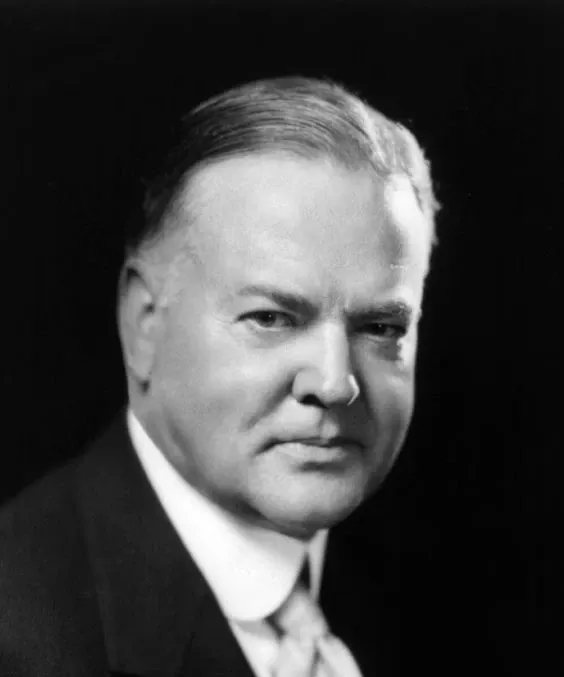
We shall never make our Republic what it should be until as a people we thoroughly understand and put in practice the doctrine that success is abhorrent if attained by the sacrifice of the fundamental principles of morality.
From the public-domain record · 81,371 quotes
Historical voices
Founders, statesmen and world leaders — cited from their collected works.
The figures
If there is one tendency of the day which more than any other is unhealthy and undesirable, it is the tendency to deify mere “smartness,” unaccompanied by a sense of moral accountability.
All men in whose character there is not an element of hardened baseness must admit the need in our public life of those qualities which we somewhat vaguely group together when we speak of “reform,” and all men of sound mind must also admit…
It is only the warlike power of a civilized people that can give peace to the world.
But the peoples that do not expand leave, and can leave, nothing behind them.
Similarly to-day it is the great expanding peoples who bequeath to the future ages the great memories and material results of their achievements, and the nations which shall have sprung from their loins, England standing as the archetype…
Nations that expand and nations that do not expand may both ultimately go down, but the one leaves heirs and a glorious memory, and the other leaves neither.
What is necessary is to approach the subject, not with a desire to get ahead of one another, but to do even and exact justice, and to put into operation a scheme which will work, while scrupulously conserving the honor and interest of all…
Fundamentally the cause of expansion is the cause of peace.
But, as it is, this country will keep the islands and will establish therein a stable and orderly government, so that one more fair spot of the world’s surface shall have been snatched from the forces of darkness.
In North America, as elsewhere throughout the entire world, the expansion of a civilized nation has invariably meant the growth of the area in which peace is normal throughout the world.
The rule of law and of order has succeeded to the rule of barbarous and bloody violence.
All civilization has been the gainer by the Russian advance, as it was the gainer by the advance of France in North Africa; as it has been the gainer by the advance of England in both Asia and Africa, both Canada and Australia.
In other words, every expansion of a great civilized power means a victory for law, order, and righteousness.
But without force fair dealing usually amounts to nothing.
Back of the force must come fair dealing, if the peace is to be permanent.
In the long run civilized man finds he can keep the peace only by subduing his barbarian neighbor; for the barbarian will yield only to force, save in instances so exceptional that they may be disregarded.
On the border between civilization and barbarism war is generally normal because it must be under the conditions of barbarism.
Scant attention is paid to the weakling or the coward who babbles of peace; but due heed is given to the strong man with the sword girt on thigh who preaches peace, not from ignoble motives, not from fear or distrust of his own powers, but…
Even with civilized peoples, as was shown by our own experience in 1861, it may be necessary at last to draw the sword rather than to submit to wrong-doing.
Wars between civilized communities are very dreadful, and as nations grow more and more civilized we have every reason, not merely to hope, but to believe that they will grow rarer and rarer.
The Armenian massacres are simply illustrations on a small scale of what would take place on the very largest scale if Tolstoi’s principles became universal among civilized people.
If Russia had acted upon Tolstoi’s philosophy, all its people would long ago have disappeared from the face of the earth, and the country would now be occupied by wandering tribes of Tartar barbarians.
If Tolstoi’s countrymen had acted according to his moral theories they would now be extinct, and savages would have taken their place.


