
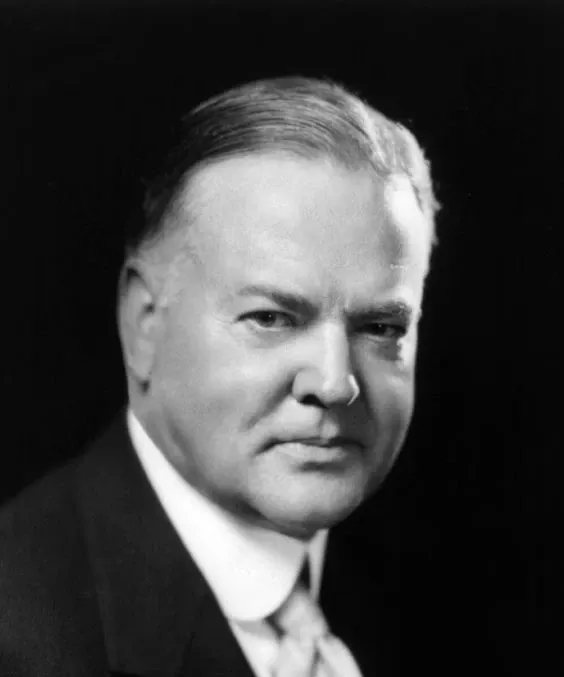

@teddyroosevelt· Republican · NY· Jan 1, 1900
The tendency is for the relations always to be between class and class instead of between individual and individual.
From the public-domain record · 81,371 quotes
Founders, statesmen and world leaders — cited from their collected works.
The figures
The tendency is for the relations always to be between class and class instead of between individual and individual.
We have sharp rivalries, and our politics are by no means always what they should be, but at least we do not divide on class lines, for the very good reason that there has been no crystallization into classes.
The only way to provide against the evils of a horizontal cleavage in politics is to encourage the growth of fellow-feeling, of a feeling based on the relations of man to man, and not of class to class.
The result might be an oligarchy, or it might be mob rule; it mattered little which, as regards the ultimate effect, for in both cases tyranny and anarchy were sure to alternate.
Republics have fallen in the past primarily because the parties that controlled them divided along the lines of class, so that inevitably the triumph of one or the other implied the supremacy of a part over the whole.
Just so far, however, as the lines are drawn horizontally, the result is unhealthy, and in the long run disastrous, for such a division means that men are pitted against one another in accordance with the blind and selfish interests of the…
The resulting government, whether of the upper or of the lower class, is not a government of the whole people, but a government of part of the people at the expense of the rest.
It is impossible for a democracy to endure if the political lines are drawn to coincide with class lines.
But the betterment must come through the slow workings of the same forces which always have tended for righteousness, and always will.
Wise legislation can help in each case, and crude, vicious, or demagogic legislation can do an infinity of harm.
Still less is there any patent device for remedying social evils and doing away with social inequalities.
There is no patent device for bringing about good government.
It is this capacity for sympathy, for fellow-feeling and mutual understanding, which must lie at the basis of all really successful movements for good government and the betterment of social and civic conditions.
In other words, I had grown into sympathy with, into understanding of, group after group, with the effect that I invariably found that they and I had common purposes and a common standpoint.
If the merchant or the manufacturer, the lawyer or the clerk, never meets the mechanic or the handicraftsman, save on rare occasions, when the meeting may be of a hostile kind, each side feels that the other is alien and naturally…
If the banker and the farmer never meet, or meet only in the most perfunctory business way, if the banking is not done by men whom the farmer knows as his friends and associates, a spirit of mistrust is almost sure to spring up.
Any healthy-minded American is bound to think well of his fellow-Americans if he only gets to know them.
The chief factor in producing such sympathy is simply association on a plane of equality, and for a common object.
It is only in American communities that we see the farmer, the hired man, the lawyer, and the merchant, and possibly even the officer of the army or the navy, all kinsmen, and all accepting their relations as perfectly natural and simple.
If ever there existed in the world a community where the identity of interest, of habit, of principle, and of ideals should be felt as a living force, ours is the one.
The great business men, even the great professional men, and especially the great statesmen and sailors and soldiers, are very apt to spring from among the farmers or wage-workers, and their kinsfolk remain near the old home or at the old…
Danger from religious antipathy is dead, and from sectional antipathy dying; but there are at times very ugly manifestations of antipathy between class and class.
What does matter is that these splendid soldiers are all Americans; that they are our heroes; that our blood runs in their veins; that the flag under which we live is the flag for which they have fought, for which some of them have died.
As we read of the famous feats of our army in the Philippines, it matters nothing to us whether the regiments come from Oregon, Idaho, California, Nebraska, Pennsylvania, or Tennessee.