
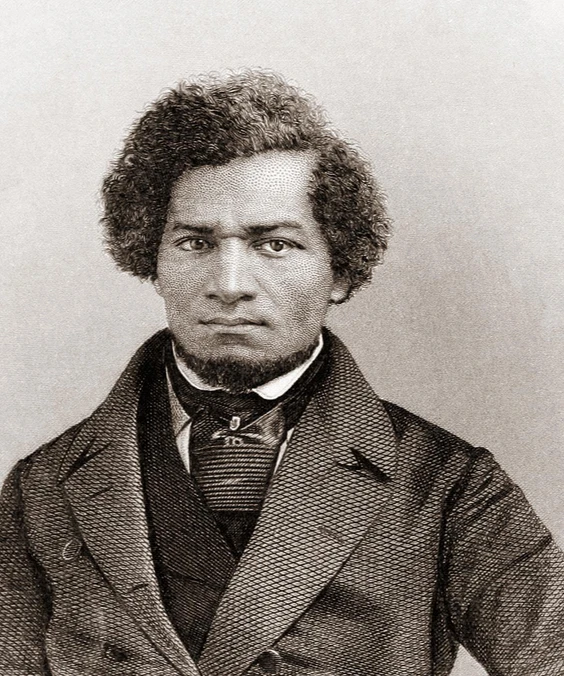

@frederickdouglass· Jan 1, 1845
But, by this time, I began to want to live upon free land as well as with Freeland; and I was no longer content, therefore, to live with him or any other slaveholder.
From the public-domain record · 81,371 quotes
Founders, statesmen and world leaders — cited from their collected works.
The figures
But, by this time, I began to want to live upon free land as well as with Freeland; and I was no longer content, therefore, to live with him or any other slaveholder.
We were one; and as much so by our tempers and dispositions, as by the mutual hardships to which we were necessarily subjected by our condition as slaves.
I loved them with a love stronger than any thing I have experienced since.
They were noble souls; they not only possessed loving hearts, but brave ones.
And I have the happiness to know, that several of those who came to Sabbath school learned how to read; and that one, at least, is now free through my agency.
I taught them, because it was the delight of my soul to be doing something that looked like bettering the condition of my race.
The work of instructing my dear fellow-slaves was the sweetest engagement with which I was ever blessed.
Michael’s unacquainted with the fact, that, instead of spending the Sabbath in wrestling, boxing, and drinking whisky, we were trying to learn how to read the will of God; for they had much rather see us engaged in those degrading sports…
A mere look, word, or motion,—a mistake, accident, or want of power,—are all matters for which a slave may be whipped at any time.
It would astonish one, unaccustomed to a slaveholding life, to see with what wonderful ease a slaveholder can find things, of which to make occasion to whip a slave.
I have ever found them the meanest and basest, the most cruel and cowardly, of all others.
For of all slaveholders with whom I have ever met, religious slaveholders are the worst.
Were I to be again reduced to the chains of slavery, next to that enslavement, I should regard being the slave of a religious master the greatest calamity that could befall me.
Another advantage I gained in my new master was, he made no pretensions to, or profession of, religion; and this, in my opinion, was truly a great advantage.
The other was a most artful deceiver, and could be understood only by such as were skilful enough to detect his cunningly-devised frauds.
The former (slaveholder though he was) seemed to possess some regard for honor, some reverence for justice, and some respect for humanity.
The mode here adopted to disgust the slave with freedom, by allowing him to see only the abuse of it, is carried out in other things.
I have said that this mode of treatment is a part of the whole system of fraud and inhumanity of slavery.
We felt, and very properly too, that we had almost as well be slaves to man as to rum.
The most of us used to drink it down, and the result was just what might be supposed; many of us were led to think that there was little to choose between liberty and slavery.
Thus, when the slave asks for virtuous freedom, the cunning slaveholder, knowing his ignorance, cheats him with a dose of vicious dissipation, artfully labelled with the name of liberty.
Their object seems to be, to disgust their slaves with freedom, by plunging them into the lowest depths of dissipation.
They do not give the slaves this time because they would not like to have their work during its continuance, but because they know it would be unsafe to deprive them of it.