
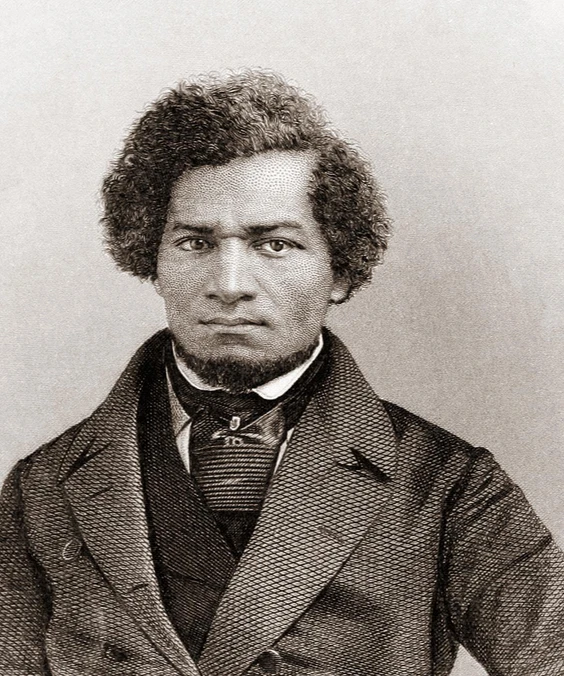

@frederickdouglass· Jan 1, 1855
The bond-woman lives as a slave, and is left to die as a beast; often with fewer attentions than are paid to a favorite horse.
From the public-domain record · 81,371 quotes
Founders, statesmen and world leaders — cited from their collected works.
The figures
The bond-woman lives as a slave, and is left to die as a beast; often with fewer attentions than are paid to a favorite horse.
The mother, at the verge of the grave, may not gather her children, to impart to them her holy admonitions, and invoke for them her dying benediction.
The heartless and ghastly form of slavery rises between mother and child, even at the bed of death.
I was victorious, and well off for the moment; prouder, on my mother’s knee, than a king upon his throne.
That night I learned the fact, that I was, not only a child, but somebody’s child.
She has no control over them; the master is even more than the mother, in all matters touching the fate of her child.
It was a greater luxury than slavery could afford, to allow a black slave-mother a horse or a mule, upon which to travel twenty-four miles, when she could walk the distance.
The pains she took, and the toil she endured, to see me, tells me that a true mother’s heart was hers, and that slavery had difficulty in paralyzing it with unmotherly indifference.
I never think of this terrible interference of slavery with my infantile affections, and its diverting them from their natural course, without feelings to which I can give no adequate expression.
The slave-mother can be spared long enough from the field to endure all the bitterness of a mother’s anguish, when it adds another name to a master’s ledger, but not long enough to receive the joyous reward afforded by the intelligent…
Accordingly, the tenderest affection which a beneficent Father allows, as a partial compensation to the mother for the pains and lacerations of her heart, incident to the maternal relation, was, in my case, diverted from its true and…
He can be father without being a husband, and may sell his child without incurring reproach, if the child be by a woman in whose veins courses one thirty-second part of African blood.
Indeed, he may be, and often is, master and father to the same child.
He may be white, glorying in the purity of his Anglo-Saxon blood; and his child may be ranked with the blackest slaves.
He may be a freeman; and yet his child may be a chattel.
When they do exist, they are not the outgrowths of slavery, but are antagonistic to that system.
Slavery has no use for either fathers or families, and its laws do not recognize their existence in the social arrangements of the plantation.
Slavery does away with fathers, as it does away with families.
The domestic hearth, with its holy lessons and precious endearments, is abolished in the case of a slave-mother and her children.
My poor mother, like many other slave-women, had many children, but NO FAMILY!
I heard the words brother and sisters, and knew they must mean something; but slavery had robbed these terms of their true meaning.
Brothers and sisters we were by blood; but slavery had made us strangers.
Born for another’s benefit, as the firstling of the cabin flock I was soon to be selected as a meet offering to the fearful and inexorable demigod, whose huge image on so many occasions haunted my childhood’s imagination.
I was A SLAVE—born a slave and though the fact was incomprehensible to me, it conveyed to my mind a sense of my entire dependence on the will of somebody I had never seen; and, from some cause or other, I had been made to fear this…