
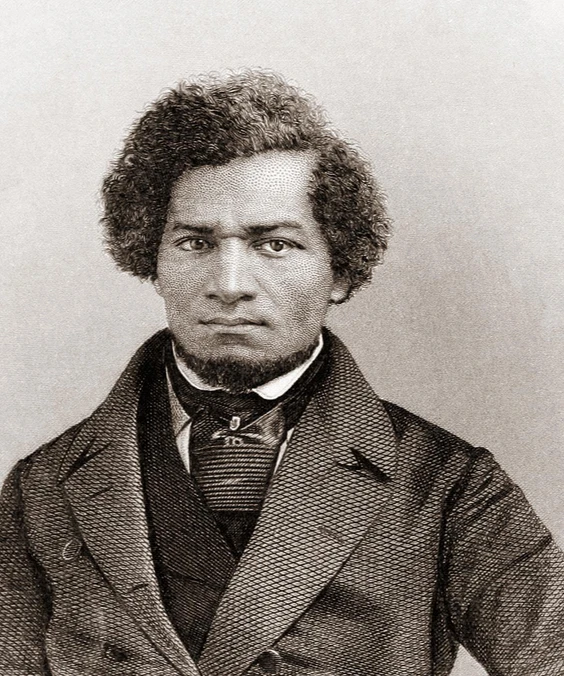

@frederickdouglass· Jan 1, 1855
This was less satisfactory than the first statement; because it came, point blank, against all my notions of goodness.
From the public-domain record · 81,371 quotes
Founders, statesmen and world leaders — cited from their collected works.
The figures
This was less satisfactory than the first statement; because it came, point blank, against all my notions of goodness.
By some means I learned from these inquiries that “God, up in the sky,” made every body; and that he made white people to be masters and mistresses, and black people to be slaves.
From my heart I pitied her, and—child though I was—the outrage kindled in me a feeling far from peaceful; but I was hushed, terrified, stunned, and could do nothing, and the fate of Esther might be mine next.
The whole scene, with all its attendants, was revolting and shocking, to the last degree; and when the motives of this brutal castigation are considered,—language has no power to convey a just sense of its awful criminality.
He was cruelly deliberate, and protracted the torture, as one who was delighted with the scene.
It is one of the consolations of my life, that I know of many honorable instances of persons who maintained their honor, where all around was corrupt.
Marriage as imposing obligations on the parties to it—has no existence here, except in such hearts as are purer and higher than the standard morality around them.
Slavery provides no means for the honorable continuance of the race.
The fear of God, and the hope of heaven, are found sufficient to sustain many slave-women, amidst the snares and dangers of their strange lot; but, this side of God and heaven, a slave-woman is at the mercy of the power, caprice and…
It is one of the damning characteristics of the slave system, that it robs its victims of every earthly incentive to a holy life.
A woman’s love is not to be annihilated by the peremptory command of any one, whose breath is in his nostrils.
He may, if he pleases, cripple or kill, without fear of consequences; except in so far as it may concern profit or loss.
What may have been mechanically and heartlessly done by the overseer, is now done with a will.
He will convince the slave that his wrath is far more terrible and boundless, and vastly more to be dreaded, than that of the underling overseer.
Yet, let but his own temper be stirred, his own passions get loose, and the slave-owner will go far beyond the overseer in cruelty.
When he drives her from his presence without redress, or the hope of redress, he acts, generally, from motives of policy, rather than from a hardened nature, or from innate brutality.
Howsoever the slaveholder may allow himself to act toward his slave, and, whatever cruelty he may deem it wise, for example’s sake, or for the gratification of his humor, to inflict, he cannot, in the absence of all provocation, look with…
It is with this final result in view, rather than with any expectation of immediate good, that the outraged slave is induced to meet his master with a complaint.
Were slaveholders to listen to complaints of this sort against the overseers, the luxury of owning large numbers of slaves, would be impossible.
This treatment is a part of the system, rather than a part of the man.
Ignorance is a high virtue in a human chattel; and as the master studies to keep the slave ignorant, the slave is cunning enough to make the master think he succeeds.
But slaveholders never encourage that kind of communication, with the slaves, by which they might learn to measure the depths of his knowledge.