



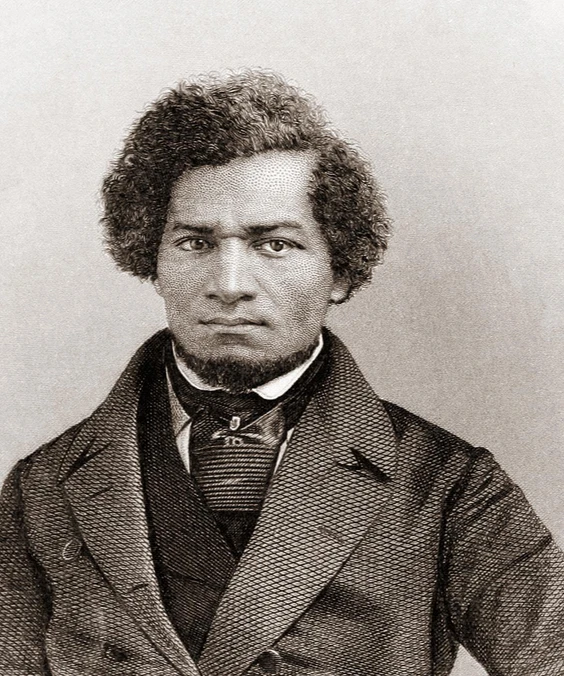


@frederickdouglass· Jan 1, 1855
It only proves to my mind, that though slavery is armed with a thousand stings, it is not able entirely to kill the elastic spirit of the bondman.
From the public-domain record · 81,371 quotes
Founders, statesmen and world leaders — cited from their collected works.
The figures
It only proves to my mind, that though slavery is armed with a thousand stings, it is not able entirely to kill the elastic spirit of the bondman.
The true reason or explanation of the matter is this: there is the greatest unanimity of opinion among the white population in the south in favor of the policy of keeping the slave in ignorance.
Education being among the menacing influences, and, perhaps, the most dangerous, is, therefore, the most cautiously guarded against.
The great mass of slaveholders look upon education among the slaves as utterly subversive of the slave system.
Conscience is, to the individual soul, and to society, what the law of gravitation is to the universe.
It is, then, the first business of the enslaver of men to blunt, deaden, and destroy the central principle of human responsibility.
As the serpent-charmer of India is compelled to extract the deadly teeth of his venomous prey before he is able to handle him with impunity, so the slaveholder must strike down the conscience of the slave before he can obtain the entire…
It cuts him off from his Maker, it hides from him the laws of God, and leaves him to grope his way from time to eternity in the dark, under the arbitrary and despotic control of a frail, depraved, and sinful fellow-man.
Its first aim is to destroy all sense of high moral and religious responsibility.
The first work of slavery is to mar and deface those characteristics of its victims which distinguish men from things, and persons from property.
It is only when we contemplate the slave as a moral and intellectual being, that we can adequately comprehend the unparalleled enormity of slavery, and the intense criminality of the slaveholder.
The physical cruelties are indeed sufficiently harassing and revolting; but they are as a few grains of sand on the sea shore, or a few drops of water in the great ocean, compared with the stupendous wrongs which it inflicts upon the…
Slavery is always slavery; always the same foul, haggard, and damning scourge, whether found in the eastern or in the western hemisphere.
It makes no difference whether the slaveholder worships the God of the Christians, or is a follower of Mahomet, he is the minister of the same cruelty, and the author of the same misery.
Whether on the coast of Africa, among the savage tribes, or in South Carolina, among the refined and civilized, slavery is the same, and its accompaniments one and the same.
The very accompaniments of the slave system stamp it as the offspring of hell itself.
From this monstrous relation there springs an unceasing stream of most revolting cruelties.
To eat the fruit of his own toil, to clothe his person with the work of his own hands, is considered stealing.
He can own nothing, possess nothing, acquire nothing, but what must belong to another.
In law, the slave has no wife, no children, no country, and no home.
He may work him, flog him, hire him out, sell him, and, in certain contingencies, kill him, with perfect impunity.
A master is one—to speak in the vocabulary of the southern states—who claims and exercises a right of property in the person of a fellow-man.
Goading as have been the cruelties to which I have been subjected—bitter as have been the trials through which I have passed—exasperating as have been, and still are, the indignities offered to my manhood—I find in them no excuse for the…