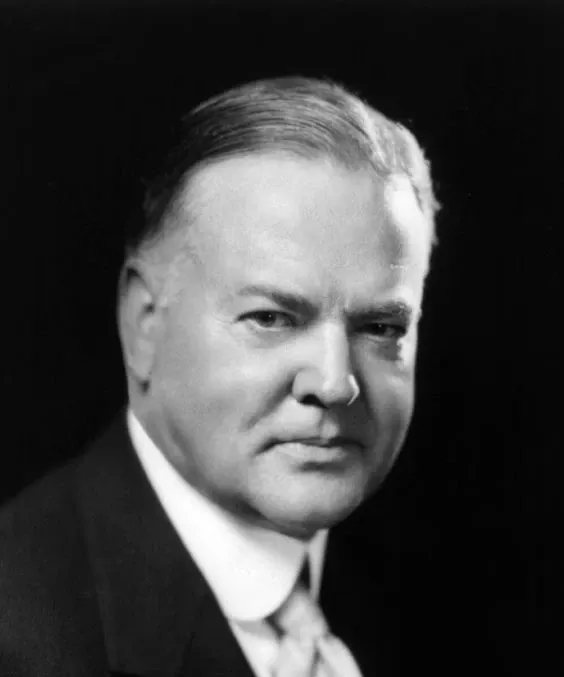
For some time men doubted as to whether the Negro could develop such leaders; but to-day no one seriously disputes the capability of individual Negroes to assimilate the culture and common sense of modern civilization, and to pass it on…
From the public-domain record · 81,371 quotes
Historical voices
Founders, statesmen and world leaders — cited from their collected works.
The figures
Such leadership, such social teaching and example, must come from the blacks themselves.
We cannot hope, then, in this generation, or for several generations, that the mass of the whites can be brought to assume that close sympathetic and self-sacrificing leadership of the blacks which their present situation so eloquently…
We must accept some of the race prejudice in the South as a fact,—deplorable in its intensity, unfortunate in results, and dangerous for the future, but nevertheless a hard fact which only time can efface.
So long as the best elements of a community do not feel in duty bound to protect and train and care for the weaker members of their group, they leave them to be preyed upon by these swindlers and rascals.
And such proceedings can happen, and will happen, in any community where a class of ignorant toilers are placed by custom and race-prejudice beyond the pale of sympathy and race-brotherhood.
Left by the best elements of the South with little protection or oversight, he has been made in law and custom the victim of the worst and most unscrupulous men in each community.
For the laborers as such, there is in these new captains of industry neither love nor hate, neither sympathy nor romance; it is a cold question of dollars and dividends.
Into the hands of these men the Southern laborers, white and black, have fallen; and this to their sorrow.
Rather it has passed to those men who have come to take charge of the industrial exploitation of the New South,—the sons of poor whites fired with a new thirst for wealth and power, thrifty and avaricious Yankees, and unscrupulous…
The rod of empire that passed from the hands of Southern gentlemen in 1865, partly by force, partly by their own petulance, has never returned to them.
After Emancipation, it was the plain duty of some one to assume this group leadership and training of the Negro laborer.
Nor does it require any fine-spun theories of racial differences to prove the necessity of such group training after the brains of the race have been knocked out by two hundred and fifty years of assiduous education in submission…
What the black laborer needs is careful personal guidance, group leadership of men with hearts in their bosoms, to train them to foresight, carefulness, and honesty.
If now the economic development of the South is to be pushed to the verge of exploitation, as seems probable, then we have a mass of workingmen thrown into relentless competition with the workingmen of the world, but handicapped by a…
On the other hand, the settled belief of the mass of the Negroes that the Southern white people do not have the black man’s best interests at heart has been intensified in later years by this continual daily contact of the better class of…
It thus happens that in nearly every Southern town and city, both whites and blacks see commonly the worst of each other.
One thing, however, seldom occurs: the best of the whites and the best of the Negroes almost never live in anything like close proximity.
All this segregation by color is largely independent of that natural clustering by social grades common to all communities.
It is usually possible to draw in nearly every Southern community a physical color-line on the map, on the one side of which whites dwell and on the other Negroes.
To bring this hope to fruition, we are compelled daily to turn more and more to a conscientious study of the phenomena of race-contact,—to a study frank and fair, and not falsified and colored by our wishes or our fears.
At the same time, too, we know that these considerations have never adequately explained or excused the triumph of brute force and cunning over weakness and innocence.
We feel and know that there are many delicate differences in race psychology, numberless changes that our crude social measurements are not yet able to follow minutely, which explain much of history and social development.
It would certainly be soothing if one could readily believe all this; and yet there are too many ugly facts for everything to be thus easily explained away.


