
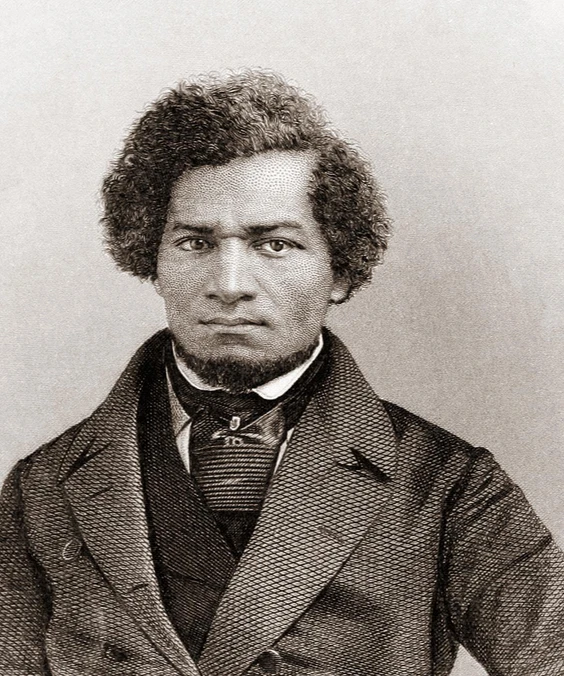

@frederickdouglass· Jan 1, 1881
Baffled, entangled, and discouraged, I had at times asked myself the question, May not my condition after all be God’s work, and ordered for a wise purpose, and if so, was not submission my duty?
From the public-domain record · 81,371 quotes
Founders, statesmen and world leaders — cited from their collected works.
The figures
Baffled, entangled, and discouraged, I had at times asked myself the question, May not my condition after all be God’s work, and ordered for a wise purpose, and if so, was not submission my duty?
I might become a husband, a father, an aged man, but through all, from birth to death, from the cradle to the grave, I had felt myself doomed.
During ten or fifteen years I had, as it were, been dragging a heavy chain, which no strength of mine could break; I was not only a slave, but a slave for life.
If life is more than breath, and the “quick round of blood,” I lived more in one day than in a year of my slave life.
No man now had a right to call me his slave or assert mastery over me.
For the moment the dreams of my youth, and the hopes of my manhood, were completely fulfilled.
The heart of no fox or deer, with hungry hounds on his trail, in full chase, could have beaten more anxiously or noisily than did mine, from the time I left Baltimore till I reached Philadelphia.
The border lines between slavery and freedom were the dangerous ones, for the fugitives.
Though I was not a murderer fleeing from justice I felt perhaps quite as miserable as such a criminal.
My whole future depended upon the decision of this conductor.
It was therefore an act of supreme trust on the part of a freeman of color thus to put in jeopardy his own liberty that another might be free.
This device of slaveholding ingenuity, like other devices of wickedness, in some measure defeated itself-- since more than one man could be found to answer the same general description.
My means of escape were provided for me by the very men who were making laws to hold and bind me more securely in slavery.
My success was due to address rather than courage; to good luck rather than bravery.
But even since the abolition of slavery, I have sometimes thought it well enough to baffle curiosity by saying that while slavery existed there were good reasons for not telling the manner of my escape, and since slavery had ceased to…
The abolition of slavery in my native State and throughout the country, and the lapse of time, render the caution hitherto observed no longer necessary.
Murder itself was not more sternly and certainly punished in the State of Maryland, than that of aiding and abetting the escape of a slave.
The second reason was, if possible, still more binding to silence--for publication of details would certainly have put in peril the persons and property of those who assisted.
In substance these reasons were, first, that such publication at any time during the existence of slavery might be used by the master against the slave, and prevent the future escape of any who might adopt the same means that I did.
In spite of all Master Thomas had said, and in spite of my own efforts to the contrary, the injustice and wickedness of slavery was always uppermost in my thoughts, strengthening my purpose to make my escape at the earliest moment possible.
I could be robbed by indirection, but this was too open and barefaced to be endured.
The practice from week to week of openly robbing me of all my earnings, kept the nature and character of slavery constantly before me.
The man who takes his earnings must be able to convince him that he has a perfect right to do so.
The right to take my earnings was the right of the robber.