Dec 12, 2012
I have noted not a few, not hundreds, but literally thousands of negative comments that have either arrived to this committee or to the regulators.
The Public Record
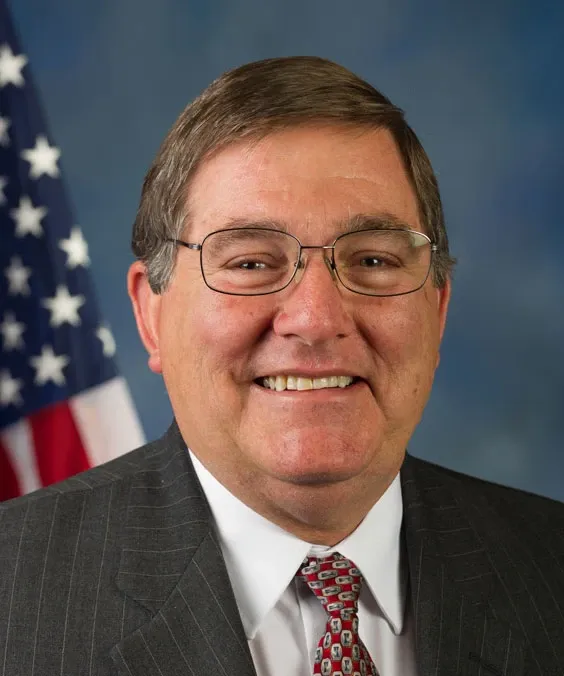
Jeb Hensarling is a former Republican member of the United States House of Representatives, representing Texas's 5th congressional district from 2003 to 2019. During his tenure, he served as the chairman of the House Financial Services Committee, where he played a significant role in shaping financial regulation and policy. Hensarling was known for his advocacy of free-market principles and his opposition to the Dodd-Frank Act, which was enacted in response to the 2008 financial crisis.
I have noted not a few, not hundreds, but literally thousands of negative comments that have either arrived to this committee or to the regulators.
I think we have all taken note of Chairman Volcker's statements that, number one, proprietary trading in commercial banks was not central to the crisis.
I will personally miss our spirited debates, not quite enough to ask him to reconsider and stay.
It is a very poor case for more complex capital standards that do not recognize the difference between large money center banks and our community financial institutions.
I would agree with the ranking minority member that it is a very open question whether Basel III should even apply to our community-based financial institutions.
We cannot solve our problems with the same level of thinking that created them.
Regardless if it is perceived in real benefits, many of us believe that there has been a substantial cost.
I guess, Mr. Cordray, what is of concern here is whether or not the agency refuses to write a rule or is incapable.
Wouldn't they want to know what is lawful and what is unlawful? If an act is abusive, it would be unlawful.
You came before us 6 months ago as an unlawful appointee and probably an unconstitutional one as well.
I do want to thank Mr. Renacci for his legislation, which I think does take us in the direction of making credit reports more complete.
I believe they are an incredibly important tool. They have helped democratize consumer credit; made it more egalitarian.
How can this not be cited as a major factor that could disrupt U.S. financial stability?
I have yet to see a reform plan for entitlement spending out of this Administration.
I see very little discussion of the U.S. debt crisis. We know that on a nominal basis, this country has now racked up more debt in the last 3 years than in the previous 200 years.
When I am speaking to either Fortune 50 CEOs, world-class investors, small business people in east Texas, here is what I hear: number one, uncertain Federal regulation and certainly harmful Federal regulation is crushing jobs; number two…
2008 was 4 years ago. I think it is an inescapable conclusion that we have seen the greatest monetary and fiscal stimulus thrown at an economy in our history, and what do we see but 41 months of 8 percent-plus unemployment, 14.9 percent…
By definition, Treasury funds are taxpayer funds, and if you don't have a bailout, I don't think you need the taxpayer funds.
The Congressional Budget Office (CBO) has estimated that the Orderly Liquidation Authority contained within Dodd-Frank could weigh in at roughly $22 billion of taxpayer money.
Isn't it true that since the passage of Dodd-Frank, the five largest banks have indeed grown larger?
Politicians like Jeb Hensarling