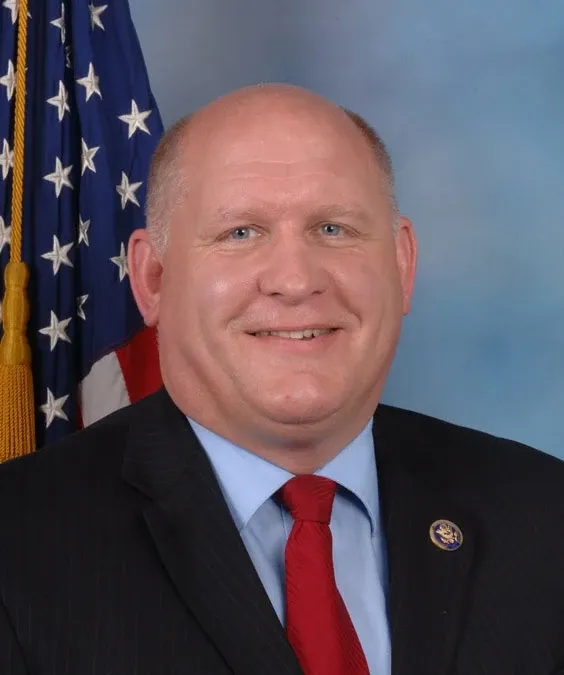
Joe Pitts
The Public Record
Joseph R. Pitts is a former Republican member of the U.S. House of Representatives, serving Pennsylvania's 16th congressional district from 1997 to 2017. During his tenure, Pitts was known for his focus on healthcare, energy, and family issues, often advocating for conservative policies. He played a significant role in various legislative efforts, including those related to the Affordable Care Act and energy independence. Pitts was also involved with the Pennsylvania Family Institute, reflecting his commitment to family values and social issues.
Mar 4, 2013
I, too, urge all Members to support this critical legislation. It has strong bipartisan support. It is very important. With that, I yield back the balance of my time.
Feb 26, 2013
Now, these are necessary and non-negotiable costs that we all want to encourage health plans to incur...
Feb 26, 2013
I am not sure, by why is HHS classifying these expenses as administrative when they are expended specifically to improve the quality of a network that a patient can access?
Feb 26, 2013
Finally, members from both sides of the aisle have stated that Congress should promote policies that encourage young people to purchase health coverage.
Feb 26, 2013
Now, there remains significant interest in Congress about antifraud efforts in Medicare and Medicaid.
Feb 26, 2013
The MLR regulations' treatment of fraud prevention expenses works at cross purposes with efforts by the Federal Government.
Feb 26, 2013
These are necessary and non-negotiable costs that we all want to encourage health plans to incur.
Feb 26, 2013
Again, credit card companies figured this out 25 years ago, and it seems like we ought to be farther along than we are now.
Feb 26, 2013
I haven't seen one indication that CMS truly knows how much it loses each year much less whether a majority of these payments are not usually fraudulent.
Feb 26, 2013
The history certainly has been of a predominantly pay-and-chase approach, and that is what the Fraud Prevention System is changing
Feb 26, 2013
We cannot rest on our laurels and be satisfied with the current successes in fraud fighting.
Feb 26, 2013
We also need to ensure that the public and private sectors are collaborating, because we know that schemes that affect programs like Medicare and Medicaid often are also perpetrated against private payers as well.
Feb 26, 2013
We are now seeing the impact of provisions in the Affordable Care Act that help us move away from the traditional 'pay and chase' approach to a more proactive approach designed to prevent fraud before it occurs.
Feb 26, 2013
Fighting fraud is critical to both of these and critical to being responsible stewards of taxpayers' dollars, an issue where we should be able to achieve bipartisan consensus.
Feb 26, 2013
I have dedicated much of my career in Congress to improving the quality and efficiency of both the Medicare and Medicaid programs.
Feb 26, 2013
How can we protect the most vulnerable in our society if we don't protect the integrity of the system that was intended to serve them?
Feb 26, 2013
I look forward to hearing from our GAO witnesses what areas in the Medicare and Medicaid programs are most vulnerable to fraud and their recommendations to combat improper payments.
Feb 26, 2013
In 2012, Medicare spent approximately $555 billion caring for more than 49 million beneficiaries.
Feb 26, 2013
Medicare has been on the Government Accountability Office's high-risk list continuously since GAO began designating programs as high risk in 1990.
Politicians like Joe Pitts