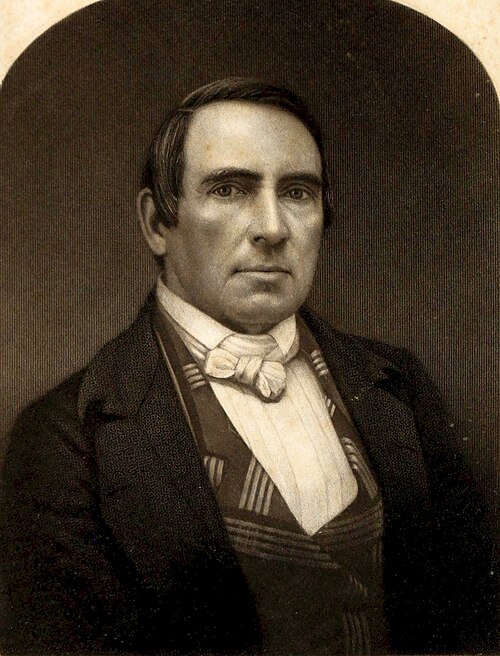
These statutes were designed to protect, as far as human law can protect, the right of every man in the United States to vote, and they were enacted with special care to arrest the dangers already developing in the South against free suffrage, and to prevent the dangers more ominously though more remotely menacing it.
Editor's note · Context
Blaine discusses the legislative measures taken to protect voting rights following the ratification of the Fifteenth Amendment.
Share
More from James Blaine
It is to the eminent credit of the Republican members of Congress that they stood in a crisis of this magnitude true to principle, firm against all the power and all the patronage of the Administration.
Their convention did more to popularize the Fourteenth Amendment as a political issue than any other instrumentality of the year.
This ratio of influence went into the Electoral College, and gave to the white men of South Carolina, Mississippi and Louisiana double the power of that enjoyed by white men in New York, Illinois and California.
Of course the Rebellion will never be suppressed in Louisiana if the professed Union men there will neither help to do it nor permit the Government to do it without their help. . . .