Jul 2, 2009
Well, there is an old adage in politics that says that, when the going gets tough, the tough get going. And now she is trying to persuade us of a new adage. And that is, when the going gets tough, the tough quit.
The Public Record
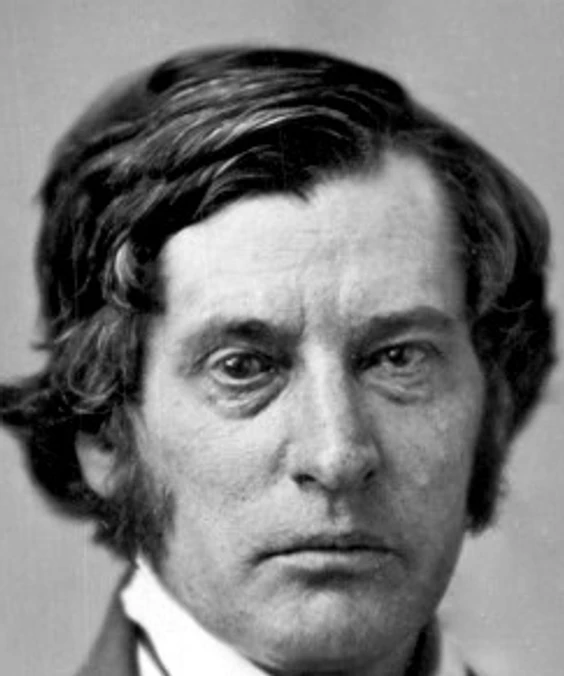
David Gergen was an American political commentator and advisor who served in the administrations of four U.S. presidents, providing insights and guidance on various political matters. Born on May 9, 1942, in Massachusetts, Gergen held significant roles in both Republican and Democratic administrations, showcasing his ability to navigate the political landscape across party lines. He was also a professor of public service at Harvard University, where he influenced a new generation of leaders. In addition to his academic work, Gergen was a senior political analyst for CNN, contributing to public discourse on current events until his passing on July 10, 2025.
Well, there is an old adage in politics that says that, when the going gets tough, the tough get going. And now she is trying to persuade us of a new adage. And that is, when the going gets tough, the tough quit.
I think there is a different alternative view of what politics can be, though. And that standing up for some principles, not trying to get ourselves injected into the middle of this.
You think that the president should show more forceful leadership in this case.
I have great respect for President Obama, but I do think that, in this situation, the voice of democracies around the world that President Obama as a leader organizes would send a clear message not only to Iran but to other dictators.
This is yet another dramatic test for this new president. Since his Cairo speech, especially, the world is looking to him for leadership.
It is very important, if he really wants to turn the page, for him now to reach out to other leaders in other nations and -- and to form a consensus.
It's very important if he really wants to turn the page for him now to reach out to other leaders in other nations and to form a consensus.
I think there's a very, very strong interest in getting Al Gore or Bill Richardson or Steve Bosworth to go over there pretty darn quickly, and see if you can't separate them out.
It could lead to a confrontation. And it's going to be a very important signal to the Iranians about what a U.S. -- how the U.S. will handle a nuclear capacity in a dangerous country.
This administration is saying, we are not going to bargain with these people anymore. We're going to get tough.
This administration is saying we're not going to go bargain with these people anymore. We're going to get tough.
He just simply, as a factual matter, acknowledged that we did intervene in Iran in the early '50s.
Without progress on the Israeli/Palestinian issue, can there be -- overall, can the president say to have succeeded anywhere in the Muslim world?
There was no way he could quite reach the summit with this speech. He couldn't please everyone. We're hearing a lot of nitpicking on aspects of the speech. But, overall, it was the most powerful and the most persuasive speech any American…
He wants to change the conversation. I think it was very intentional that they did not talk about terrorism today.
A distinction between apology and acknowledgment is a very important distinction.
If he can successfully withdraw from Iraq without Iraq falling apart, if he can demonstrate that we do not want bases in Iraq, if he can, in fact, help to build a nation state of some sort of stability in Afghanistan that which would be a…
Overall it was the most powerful and the most persuasive speech any American president has ever made to the Muslim populations around the world.
I think the real trick here -- I mean, I think the challenge here is, with the expectations oh -- how -- this high, how does he reach those expectations, without -- without causing reverberations and negative questions beyond the speech?
We're learning now that Barack Obama is a man of enormous daring, Anderson. He started talking about this speech way back in the campaign. The White House has built it up, so that expectations are sky-high.
I think the real trick here, I mean, I think the challenge here is with the expectations so high -- this high, how does he reach those expectations without causing reverberations and negative questions beyond the speech.
If he does that, he is going to antagonize a huge number of people back in the United States.
Politicians like David Gergen