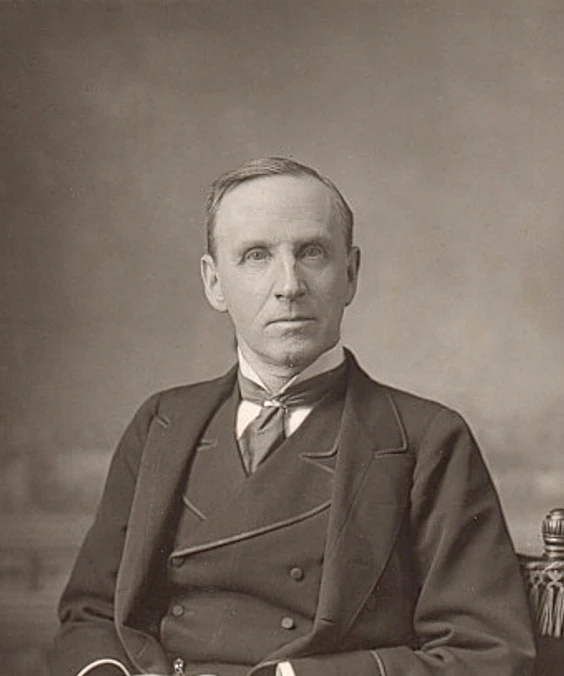
That is to say, an action may require all our attention and all our volition for its first, or second, or third performance, but by frequent repetition it becomes, in a manner, part our organisation, and is performed without volition, or even consciousness.
Walter Bagehot: “That is to say, an action may require all our attention and all our volition for its first, or second, or third…”
Editor's note · Context
Bagehot discusses how repeated actions become automatic over time, highlighting the relationship between practice and consciousness.
Share
More from Walter Bagehot
Just so the lines of our Constitution were framed in old eras of sparse population, few wants, and simple habits; and we adhere in seeming to their shape, though civilisation has come with its dangers, complications, and enjoyments.
The lessons are good where its primitive assumptions hold, but may be false where those assumptions fail.
The casual line was traced according to the strength of deceased combatants; succeeding generations fought elsewhere; and the hesitating line of a half-drawn battle was left to stand for a perpetual limit.
Our law very often reminds one of those outskirts of cities where you cannot for a long time tell how the streets come to wind about in so capricious and serpent-like a manner.