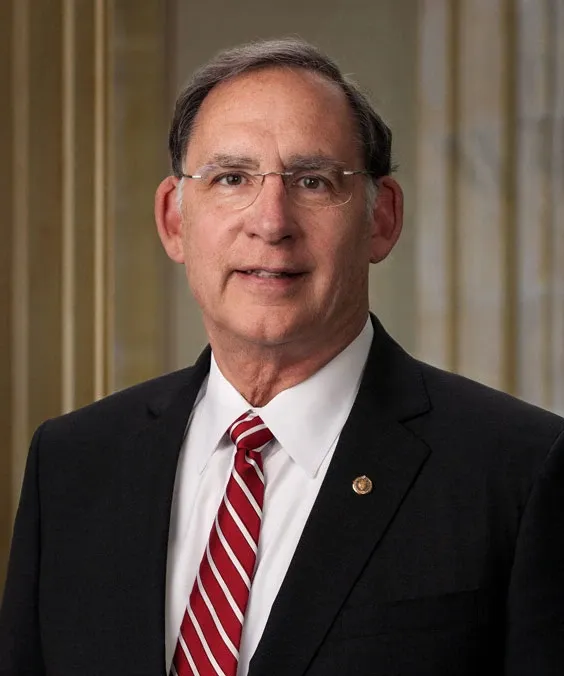
@johnboozman· Republican · AR· Mar 14, 2017
We appreciate your preaching job for today, and we appreciate all of you for being here.
On the public record
Every politician on the site, every statement on file. Search, filter, and read the public record.
52,800+·quotes on file
We appreciate your preaching job for today, and we appreciate all of you for being here.
We are currently moving ahead to implement a commercial scheduling solution called MASS, the Medical Appointment Scheduling System.
I have been here since 2001, on the VA Committee in the House and now in the Senate, and this is just something that has been difficult.
Very good. That is a great step in the right direction. That is encouraging.
I was pleased that recently, I believe Dr. Shulkin said that we were going to be looking at commercial applications.
We can no longer afford this misalignment--not only is it costly, but it also poses undue risk.
I do expect that we will be fighting away games because, quite frankly, that is a premise of our national security strategy.
The nature of this future battlefield... makes that unavoidable.
Deploying large numbers of American military forces onto foreign soil to nation-build vice accomplishing a defined mission is counter-productive.
The pace and tenor of our lives has been irrevocably altered by the acceleration of change.
Our defense strategy must contend with non-state and transnational actors; a rising economic and military powerhouse in China.
The biggest challenge our defense establishment faces is one of institutional inertia.
I commend Chairman Cotton, Senator King, and the rest of the Airland Subcommittee for beginning this conversation.
No doubt about that as was true in the Cold War as well in Central America and Grenada and the threats from Cuba.
For the life of our country, we have mostly thought away games, especially in the last 100 years.
We got stuck in Iraq and Afghanistan because we cared about the political outcomes of those countries afterwards.
We have to contend with increasing personnel and procurement costs at a time when defense budgets are decreasing.
It is $25 billion in debt. And while the program does help some Americans with moderate incomes, as well as farmers, it also takes money from working-class Americans to subsidize beach homes for the rich.