Feb 8, 2019
I thank the gentleman from Tennessee for his kind words. Mr. Chairman, I yield 1 minute to the gentleman from California (Mr. Takano).
The Public Record
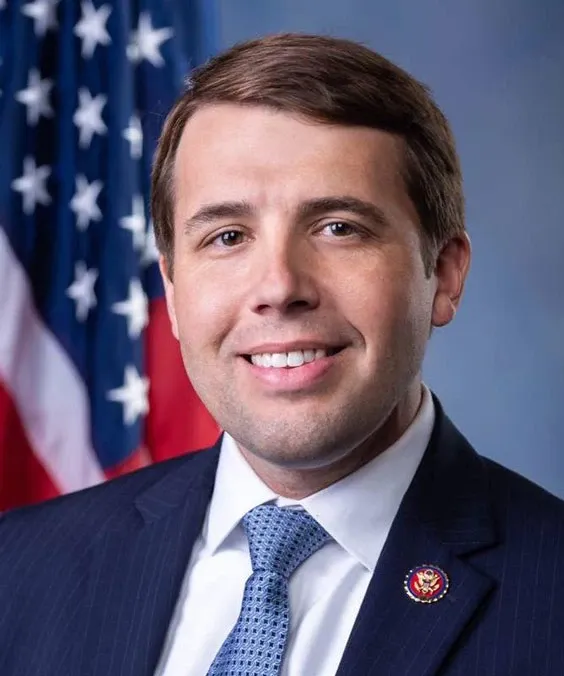
Annie L. McLane Kuster is an American politician serving as the U.S. Representative for New Hampshire's 2nd congressional district since January 3, 2013. A member of the Democratic Party, Kuster has focused on issues such as healthcare, women's rights, and economic development throughout her tenure in Congress. She has been an advocate for expanding access to affordable healthcare and has worked on initiatives to support small businesses in her district.
I thank the gentleman from Tennessee for his kind words. Mr. Chairman, I yield 1 minute to the gentleman from California (Mr. Takano).
I urge my colleagues to support this amendment, and I yield back the balance of my time. The Acting CHAIR. The question is on the amendment offered by the gentlewoman from New Hampshire (Ms. Kuster). The amendment was agreed to. Amendment…
First, I thank the members of the House Veterans' Affairs Committee and our new leader, Mark Takano. Time and again, this committee proves that Congress can work across the aisle to pass commonsense policy to improve the lives of our…
The consequences of separation of children from their parents will be lifelong.
I would far rather have those children in a loving home with a parent, a grandparent, someone who will care for them, than to have them separated and placed in an agency.
So how could we change? Could we have social workers at that initial moment to sort this out?
Can you promise me that there's no agency across this country where ORR has placed a child that has somehow slipped into a State court?
I think certainly my constituents, but I think constituents across this country were so shocked and concerned to read today about this issue that your Department had only spent 1 percent of the $6 million for suicide prevention.
I appreciate your personal commitment. I have literally heard that five times, and veterans are dying every single day.
New Hampshire is one of the rare States without a full service VA Hospital, and I think we are all trying to find this balance of care at the VA.
We can't really respond here in our oversight function to the concept of doing your best if we don't know what your goals are.
I very much appreciate the progress that is being made by the VA on the opioid epidemic.
Does that program have functional capacity at all the VSNs around the country as well?
I also want to thank Mr. Coffman for that line of questioning and for his bill that I have signed onto with Mr. O'Rourke on VA over-prescribing practices as they are related to suicide.
I thank the Congresswoman for yielding and for hosting this Special Order on this important issue. Every single day, we ask the men and women who serve our Nation in uniform to make incredible sacrifices on behalf of our Nation, and they…
I want to thank you for giving me the opportunity to testify today about my bill, H.R. 6418, the VA Website Accessibility Act of 2018.
I appreciate the opportunity to share with you today the position of The American Legion.
It is very important that this Congress and the VA continue to ensure that all of our veterans, including those with visual impairments, have full access.
I mean, I guess what I want to hear from you is some urgency in tackling this.
Do you agree that, for example, in Manchester, New Hampshire, surgeries had to be stopped because there was--the quote that I read--rust or blood on the surgical instruments?
Politicians like Annie Kuster