Nov 8, 2009
I would like to thank you for the opportunity to discuss legislation before this committee on America's great water bodies, in particular the Gulf of Mexico.
The Public Record
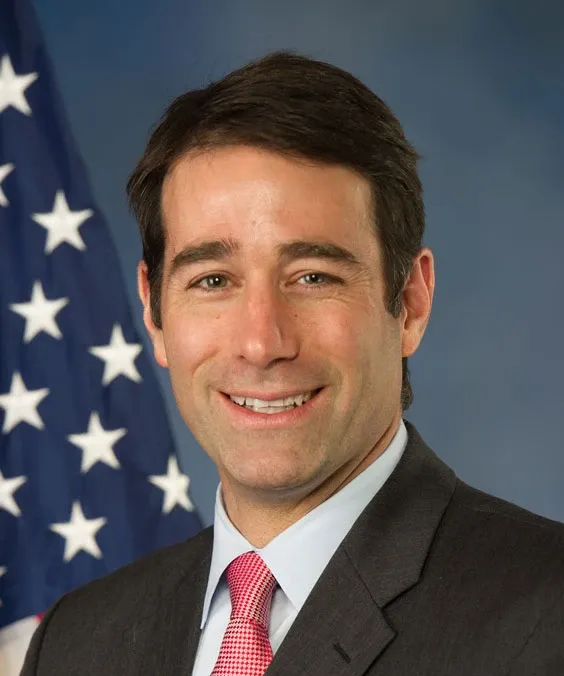
David Vitter is a former United States Senator from Louisiana, serving from 2005 to 2017. A member of the Republican Party, Vitter was known for his focus on issues such as transportation, infrastructure, and environmental policy. During his tenure, he served on various Senate committees, including the Environment and Public Works Committee, where he addressed topics like water quality and pharmaceuticals in the nation's waters.
I would like to thank you for the opportunity to discuss legislation before this committee on America's great water bodies, in particular the Gulf of Mexico.
Cap-and-trade is potentially a new stealth tax in the order of magnitude of more than $1,700 per American household annually.
Economic costs will likely be on the order of 1 percent of GDP, making them equal in scale to all existing environmental regulation.
But, you have to do it differently than it was done before if you do that, because before, it was viewed by many of the participants as more impediment than help.
I believe this is an important discussion we are having today, and one that needs to be held over and over again.
But, if those funding gaps can be filled, in recognition of the role that agency and program plays in this broader national agenda, then I think we create something which is capable of serving the national need.
I doubt whether very many of them--or many of us in the Congress--could provide a detailed answer to the question of why they feel it is important.
But, if you say, 'Who has the mandate in this?' it's probably the President's science advisor and the national security advisor.
Thank you very much, Mr. Chairman. Thanks for calling this important hearing, and I certainly join you and Senator Hutchison in welcoming our very, very distinguished panel.
Whatever those numbers are, they clearly are going to be very significant. What is the taxpayer exit strategy from that type of liability?
I thought the Administration was virtually always for comprehensive reform. I guess that breaks down when it comes to Fannie and Freddie in terms of doing it together with these other pieces.
But beyond that, shouldn't there be a strategy for exiting out of that type of liability for the taxpayer in the future?
I hope as the Committee works hopefully in a bipartisan way on this, we sort of use as a starting point what the real problems were that developed over the last several years.
Just in your business, what percentage of the 504 activity do you think is 'rural'?
Thanks very much, Ed. Thanks to all of you for being part of this roundtable.
This is really important for us, and I think it is a lot more relaxed and flexible mechanism to get a lot of good input and ideas from the real world versus a formal hearing.
If we were in December right now and current economic conditions were conditions in December, what would your analysis be of extending the TARP or not?
I represent Louisiana, which includes Michoud. I am all for the external fuel tanks. But my concern is once you start putting off the next generation that much, you threaten ever getting there.
The consequence of that today is the gap with which most of us are not particularly happy.
I am doing this calculation mentally, but it would probably be about $18 billion over to close the gap...
Politicians like David Vitter