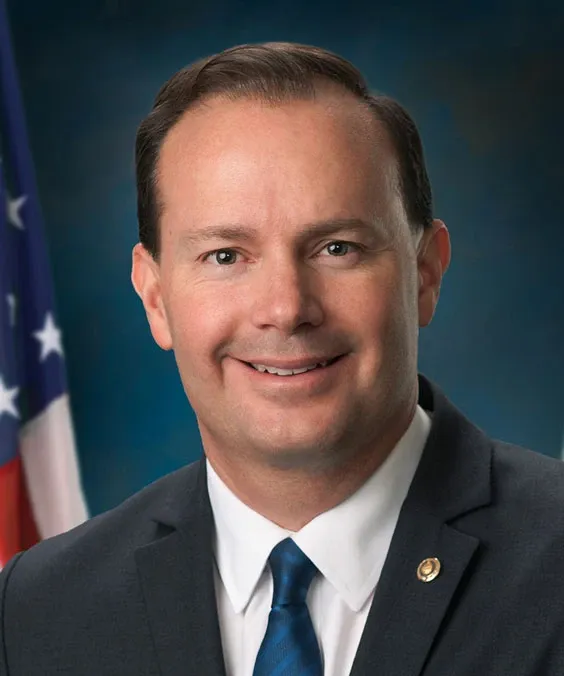
@mikelee· Republican · UT· Jul 22, 2013
Our laws create a statutory presumption as to the patent's validity.
On the public record
Every politician on the site, every statement on file. Search, filter, and read the public record.
9,100+·quotes on file
Our laws create a statutory presumption as to the patent's validity.
Running against the shot clock here--it's something we deal with a lot in the Senate.
I think you have to presume that the patent is invalid in order, legitimately, to call it pay for delay.
A presumption of illegality is proper only when 'an observer with even a rudimentary understanding of economics could conclude that the arrangements in question would have an anti-competitive effect on customers and markets.'
Mr. Orszag, so much of the discussion today, including some of your discussion with Senator Klobuchar, has focused on the potential harm to customers that consumers might incur from reverse settlements among pharmaceutical manufacturers in…
And it's for that very reason that the Supreme Court has tended, over the course of the last century, to lean more toward the Rule of Reason and away from per se rules of invalidity and also from presumptions of illegality.
We don't want anti-competitive behavior in our marketplace.
In your testimony you note that we have a statutory directive that exists under current law that all patents are to be presumed valid.
By the way, when we're in the context of a patent, isn't there something sort of internally inconsistent or contradictory about a standard that would require the patent holder in this context to produce clear and convincing evidence to…
Whereas, with Rule of Reason analysis they could continue to take into account the presumption of patent validity and that would operate unhindered in that context.

About 65 percent of my State is controlled by the Federal Government, they are Federal lands.

I pledge to dedicate myself to the fair and even-handed enforcement of the commands of the National Labor Relations Act.
Yet in 2011, the Board finalized two rules, both of which were extremely controversial.
I believe in the right and obligation of Congress to engage in oversight.
The Constitution grants Congress the authority to amend statutes including the National Labor Relations Act.
I'm impressed with both of you, and I'm hopeful that you'll be great members of the Board.
The question of the January 2012 recess appointments is currently pending before the Supreme Court.
I think that encapsulates pretty well their approach, and I wish we had a little more time to discuss that but perhaps another time.